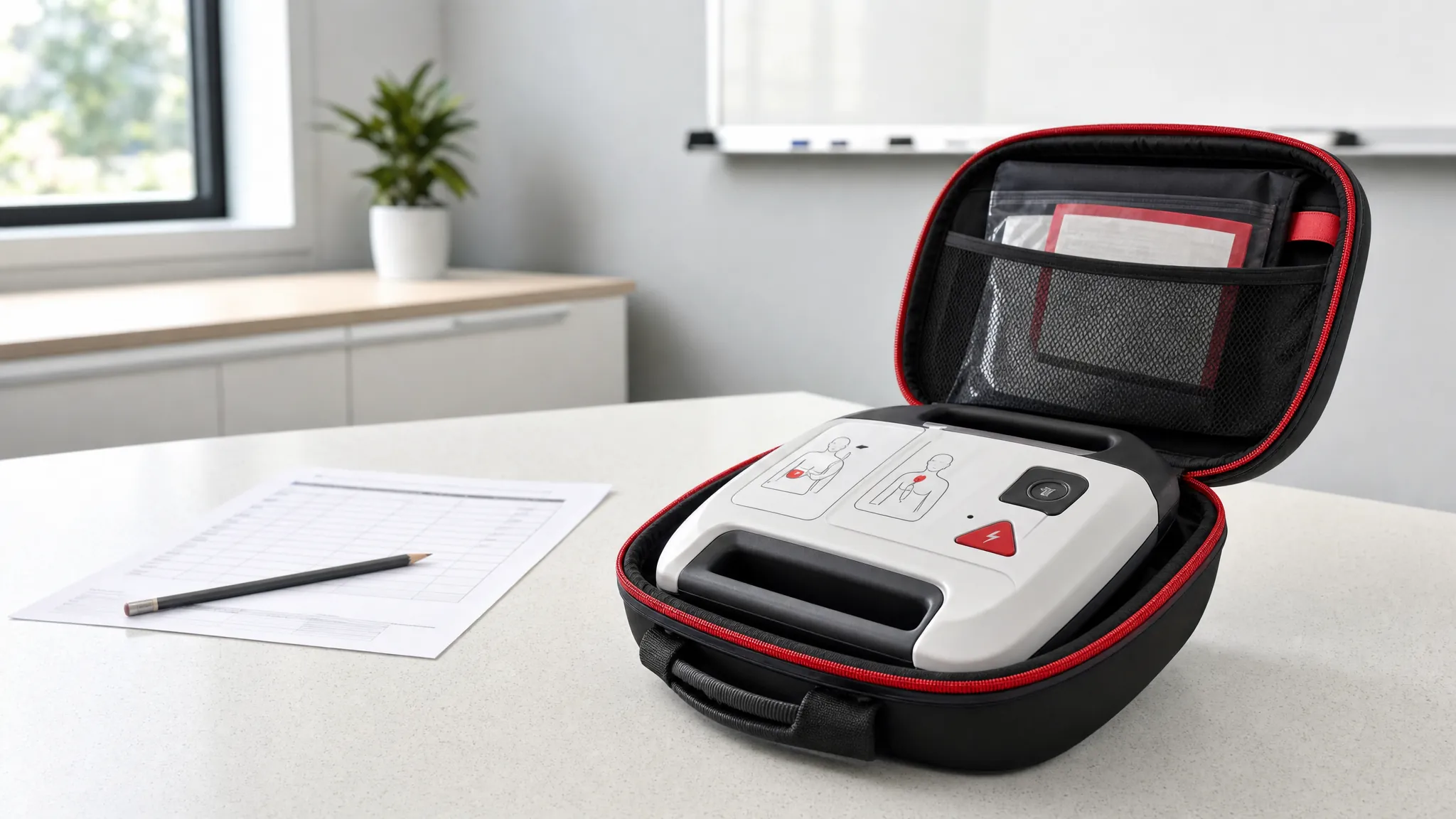
An AED trainer is a practice device that lets people learn the sequence of using an AED without using the live unit that protects the building. It is not a backup emergency device and it does not deliver a shock. Its job is to make the response feel familiar: recognizing the equipment, placing training pads, listening to prompts, clearing the patient, and returning to CPR when the scenario calls for it.
That distinction matters for any workplace, school, gym, faith community, or training provider. A live AED needs to remain ready for a real emergency. An AED trainer gives instructors and teams a way to repeat the motions, ask questions, and make ordinary mistakes in a controlled setting. The American Red Cross explains that AED use is part of a wider response that includes calling 911, applying pads, allowing analysis, and resuming CPR as directed. Its AED steps overview is useful context for what a practice session should reinforce.
What is an AED trainer?
An AED trainer, sometimes called a training AED or simulator, is designed to imitate the prompts and workflow of an AED during a class or practice session. Depending on the model, an instructor can select a training scenario, use a remote control, change the prompt sequence, or work with adult and pediatric training pads. The device is clearly marked for training so it cannot be mistaken for emergency equipment.
The goal is not to create a dramatic simulation. It is to help participants understand the first few actions that matter most when someone collapses: get help, start CPR when appropriate, bring the AED, expose the chest, apply pads as shown, keep clear while the device analyzes, and keep following the prompts. An AED trainer makes those steps easier to practise than a verbal explanation alone.
A useful trainer also gives the instructor room to pause, reset, and repeat. That is particularly valuable for a new safety team, a school staff group, a gym crew, or volunteers who may not use the equipment often. The practice device should support the type of session you actually plan to run, rather than adding complexity that nobody will use.
A live AED and an AED trainer have different jobs
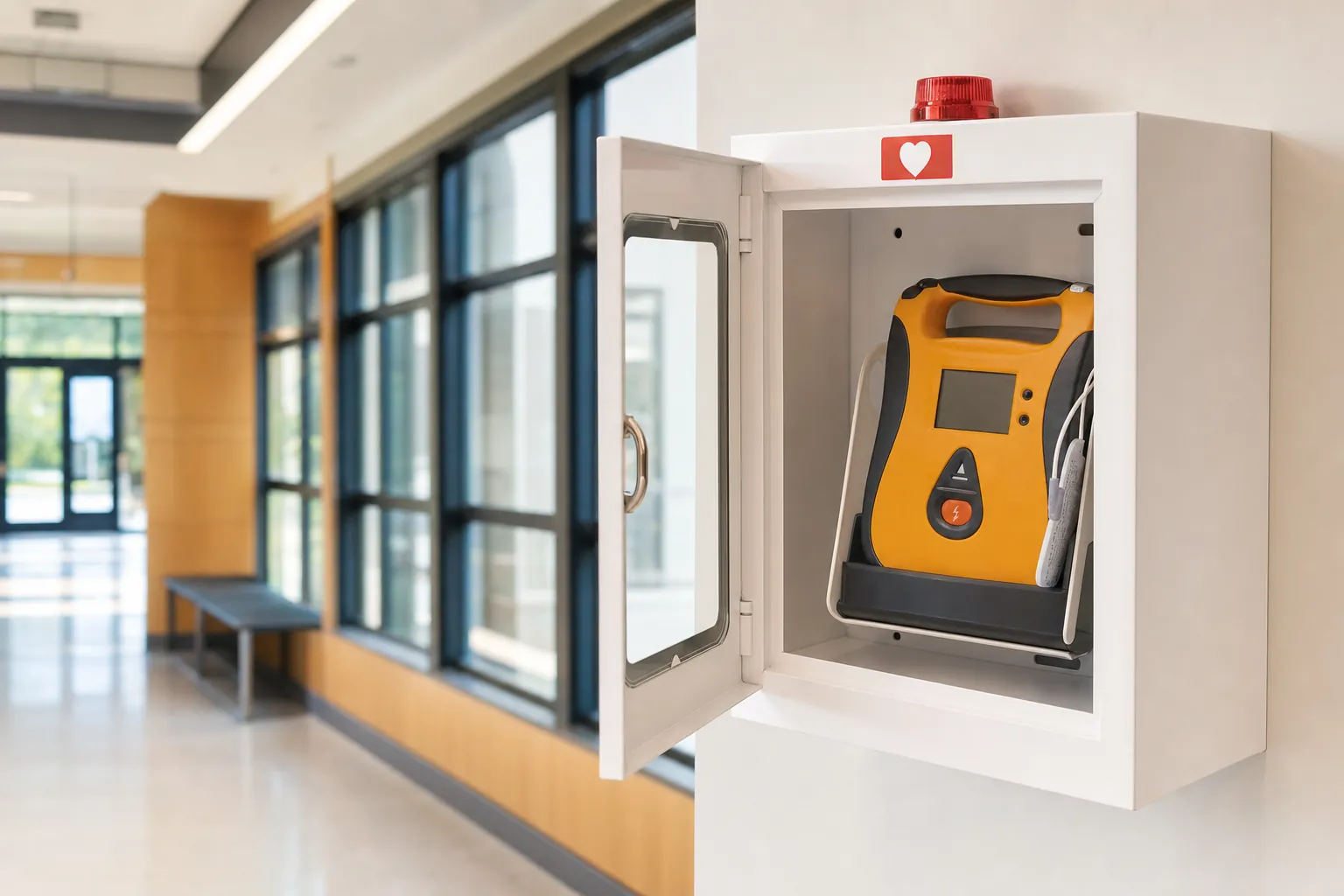
A live AED is emergency equipment. It analyzes a heart rhythm and provides treatment guidance during a suspected sudden cardiac arrest. The U.S. Food and Drug Administration describes AEDs as portable devices that analyze the heart rhythm and can guide a rescuer when a shock is advised. Read the FDA's AED overview for the clinical role of the live device.
An AED trainer is for learning. It may look similar to a particular AED model, but it uses practice pads and simulated prompts. It should never be mounted as the building's emergency device, carried as a response unit, or used in place of an AED. The live device and the trainer should be stored, labeled, and explained differently so there is no hesitation about which one belongs in an emergency.
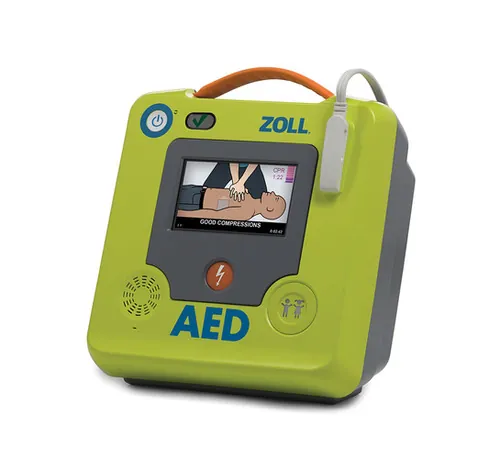
For organizations that own a specific AED model, a matching trainer can be especially practical because the button layout, pad placement illustrations, and prompts feel more familiar. That is useful, but it is not the only buying factor. A trainer also needs to suit the number of learners, age groups, scenarios, and instructors involved in the program.
Start with the people and setting
Before comparing models, describe the practice session. Is it a short orientation for office staff? A recurring CPR class? A school team preparing for athletics events? A training provider who needs several learners moving through stations? The answer affects how many trainer units, remotes, practice pad sets, and manikins are sensible.
A small workplace may only need one trainer to help a designated response team become familiar with the location's plan. A busy instructor may need several units so participants are not standing in line to press the same buttons. A school, camp, or community organization that serves children should also think through whether pediatric practice is part of its program.
Do not choose a trainer solely because it is the lowest-cost item in the category. A device that does not match the intended audience, cannot support the scenarios you teach, or has hard-to-replace training pads can become a frustrating purchase. Start with the training goal, then choose equipment that makes that goal easier to repeat.
Match the trainer to the AED your team knows
When an organization has a live AED already in place, first identify its exact brand and model. That makes it easier to look for a matching trainer, compatible practice pads, and any scenario accessories made for that device family. A matching trainer can help people recognize the physical layout and prompts they are likely to encounter at their own location.
Matching matters most when the practice is meant to support a specific building's response plan. Staff who learn on a similar device are more likely to notice where the pads are stored, how the lid or case opens, and how the voice prompts progress. It also gives the AED owner a cleaner way to explain what is live equipment and what is used only for training.
There are situations where a general trainer is enough. A course provider may need a straightforward way to teach the sequence across several brands, or an organization may be building a program before choosing its live AED. In that case, prioritize clear prompts, usable scenarios, durable practice pads, and easy resets. Just make sure participants understand that every live AED should be followed according to its own prompts and operating instructions.
Choose the right training scenarios
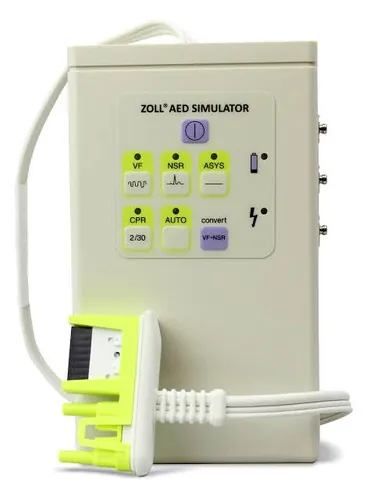
Many AED trainers can run more than one simulated scenario. That allows an instructor to practise the full sequence, including a situation where the device advises a shock and one where it does not. The feature is valuable because it teaches participants to listen to the device instead of assuming that every collapse leads to the same action.
For a basic workplace session, a small set of clear scenarios is often enough. Participants need to hear the prompts, practise clearing the area, and return to compressions without freezing when the device changes direction. For an instructor-led course, a remote control or scenario selector can make it easier to adjust the exercise without stopping the class.
More scenarios are not automatically better. Choose the trainer that supports the level of practice your team will realistically repeat. A simple, well-run session that people can revisit is more useful than an elaborate program that depends on one person who is never available.
Plan for adult and pediatric practice
Some organizations serve both adults and children, so the training plan needs to reflect that. Schools, youth programs, recreation facilities, churches, and family-focused workplaces may want participants to understand how the device's pediatric option works. The right approach depends on the AED model, the training curriculum, and the people the location serves.
Check whether the trainer supports pediatric practice and whether the relevant training pads, key, cartridge, or accessory are included or sold separately. Do not assume a trainer has the same pediatric configuration as the live AED. Confirm the product details and make sure any accessory is compatible with the exact training unit.
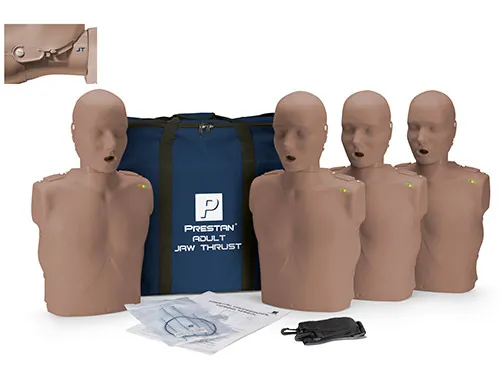
For hands-on practice, pair the AED trainer with appropriate CPR manikins. A trainer can demonstrate prompts and pad placement, while the manikin gives participants a realistic place to practise compressions and the transition back to CPR. This combination helps a group work through the response as a sequence rather than treating the AED as an isolated piece of equipment.
Think about class size and how often you practise
The number of learners changes the equipment decision quickly. One trainer may work well for a small office refresher where a handful of people take turns. It becomes less practical when a trainer leads a class of twenty people, several departments, or a recurring course. Waiting for one device can turn a hands-on session into a lecture.
Estimate how many people should be able to participate at once. A useful starting point is to group learners around stations, with each station having a manikin, an AED trainer, and the accessories needed for the exercise. The exact ratio depends on the instructor, available space, and course format, but the objective is simple: keep each person involved often enough to remember the sequence.
Frequency matters too. An organization that practises once during onboarding has different needs from a training provider, school nurse, or safety team running sessions throughout the year. For recurring practice, prioritize durability, easy cleaning, replacement pad availability, charging or battery needs, and a carrying case that keeps the equipment organized between sessions.
Do not overlook pads, batteries, remotes, and cases
An AED trainer is a system, not just a handheld device. Practice pads eventually wear out. Some trainers use a rechargeable battery pack, while others use standard batteries or a specific charging setup. A remote may be essential for an instructor who wants to change scenarios from across the room. A case can matter when the equipment moves between classrooms, branches, or event sites.
Before buying, make a simple list of the parts you will need to keep the trainer useful: the base unit, adult training pads, pediatric practice accessories if needed, power or charging equipment, a remote if the course requires one, and a case or storage plan. This makes comparisons fair and prevents a device from arriving without the item needed to run the first session.
It is also worth checking the availability of replacements at the same time. A trainer with a clear path to replacement pads and accessories is easier to keep in service. AED Ready Now's AED trainers and accessories collection groups trainer units, training pads, remotes, batteries, chargers, and related supplies so buyers can compare the complete practice setup.
Build the session around a simple response sequence
A useful training session has a clear beginning, middle, and end. Start by explaining the location's emergency plan and the role of the live AED. Then let participants practise the sequence with the trainer: recognize an unresponsive person, call 911 or assign someone to call, begin CPR when appropriate, retrieve the AED, expose the chest, apply the training pads, listen to the prompts, make sure everyone is clear for analysis, and return to CPR when instructed.
That sequence is more important than trying to turn every session into a test. Participants should leave knowing where their AED is, what the trainer is for, and how the responsibilities fit together. An instructor can use a simple scenario to ask practical questions: Who gets the device? Who stays with the person? What happens if the closest entrance is locked? Who meets emergency responders? The answers should match the building, not a generic script.
Keep the practice calm and repeatable. The first round can be a walkthrough where people talk through each action. A second round can add a simulated prompt sequence and a little time pressure. The aim is familiarity, not speed for its own sake. When people understand the order of events, they are less likely to lose time debating what happens next.
Use the trainer during onboarding and after site changes
AED practice should not disappear after one annual safety meeting. New employees, coaches, volunteers, and front-desk staff may be the people closest to the AED when something happens. A brief orientation with the trainer can show them where the device lives, how to recognize the cabinet or case, and who owns the monthly readiness check.
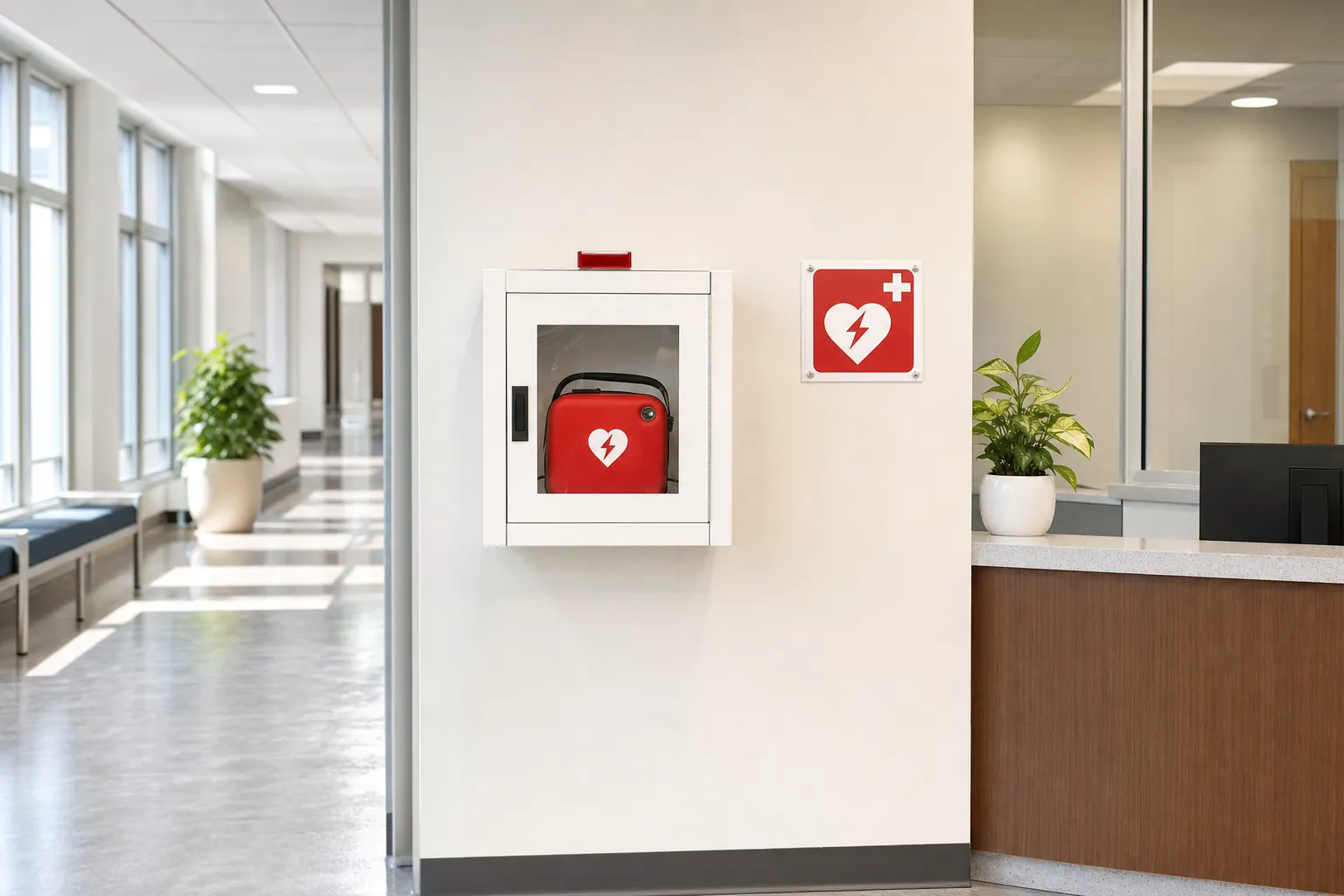
It is also smart to revisit the session after a building change. A move to another floor, a renovation, a new athletic area, a different reception arrangement, or expanded evening hours can all change the retrieval route. The AED placement guide can help teams test access, visibility, and after-hours routes before treating the plan as settled.
Use the trainer to walk the updated route rather than assuming everyone will remember it. Someone who did not help choose the AED location is a good person to include. If that person cannot identify the right route without coaching, the plan probably needs clearer signage, better communication, or a different location.
Close each practice session with a readiness check
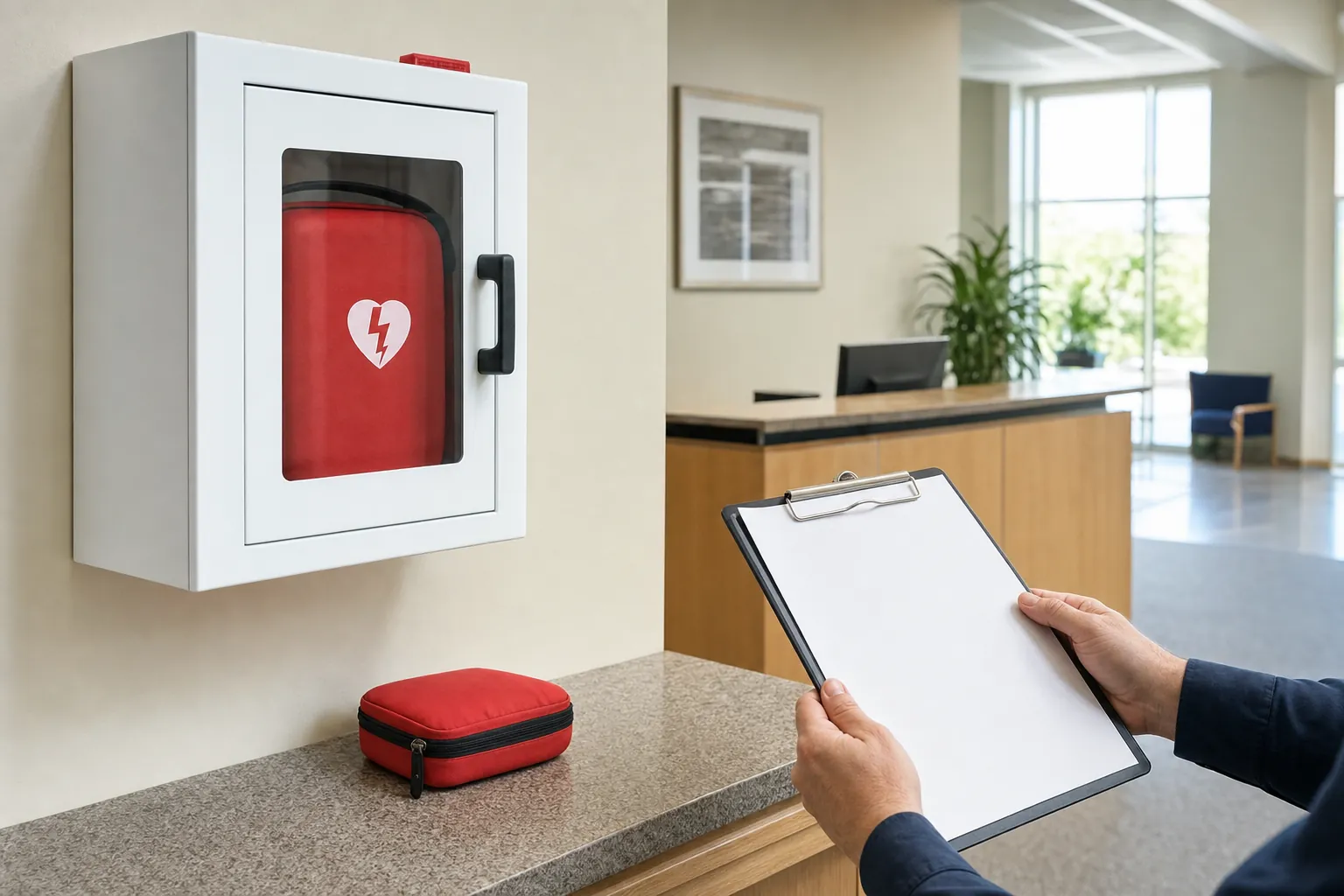
When the practice is over, take a few minutes to separate what belongs to training from what belongs to the live response setup. Put the trainer, remote, practice pads, and manikins back in their own labeled case. Then confirm that the building's live AED is still in its assigned location, accessible, and untouched by the class.
Capture any useful findings while they are fresh. A team may have discovered a confusing cabinet location, an after-hours access problem, a missing wall sign, or uncertainty about who orders replacement supplies. Those findings are not a failure of the session. They are exactly why practice is worth doing. Assign a person to address each issue and revisit it at the next readiness check.
The site's AED maintenance checklist is a useful companion for the live device. It covers the practical follow-through around location, readiness indicators, pads, batteries, records, and post-use recovery. Training is stronger when the practice equipment and the real AED program are both looked after.
Keep a short record of the session as well. Note who participated, which scenario was used, what equipment needs attention, and any change to the response plan. A brief record makes it easier to bring new people into the process and shows that the organization is treating practice as part of ongoing readiness rather than a one-time event, even as staff and locations change.
Avoid common AED trainer mistakes
The most avoidable mistake is confusing training equipment with emergency equipment. The trainer should be clearly marked, stored separately, and never left in the live AED cabinet. Make that distinction part of every practice session, especially if the trainer closely resembles the AED used in the building.
Another common mistake is practising only the moment a shock is advised. A real AED may advise a shock or tell the responder to continue CPR. Training should include both kinds of simulated scenarios so participants learn to follow the prompts rather than expecting one outcome. It should also reinforce that the device analyzes the rhythm, while the responder follows emergency guidance and the instructions given by the AED.
Finally, do not overlook the condition of the trainer itself. Check that practice pads still attach properly, the battery or charger is available, the remote works when required, and the case contains the parts used in the course. A small check before each session prevents an instructor from opening a bag in front of a class and finding that the key accessory is missing.
Use a trainer to rehearse your real response plan
An AED trainer is most valuable when it is connected to the actual place people work, learn, exercise, or gather. During practice, ask participants where the live AED is located, who calls 911, who retrieves the device, who begins CPR, and what happens when the usual front desk or manager is not available. The American Heart Association's CPR guidance reinforces that CPR and rapid AED access work together during a cardiac arrest response.
A brief walkthrough can expose ordinary problems: an AED behind a locked door, an unclear cabinet location, a staff member who does not know the after-hours route, or a team that has no simple way to divide roles. Those are useful findings. They can be corrected during planning instead of becoming a surprise when people are under pressure.
Use the trainer for the practice, but keep the live AED ready. Do not remove pads, batteries, or accessories from the emergency device to make a training exercise work. Dedicated training equipment protects the readiness of the AED that belongs on the wall or in the response kit.
A practical AED trainer checklist
Use these questions to narrow the choice before you order:
- What live AED do we have? Identify the exact brand and model, then consider whether a matching trainer would make practice more familiar.
- Who will use the trainer? Define whether it is for a small response team, a classroom, regular instructor-led sessions, or a larger organization.
- What scenarios need to be practised? Choose enough variety to teach people to follow prompts, without paying for features the course will not use.
- Do we need pediatric practice? Confirm the trainer supports the pediatric accessories and pad configuration required for your program.
- How many stations do we need? Plan enough trainer and manikin setups to keep the class hands-on.
- What accessories keep it usable? Include practice pads, batteries or chargers, remotes, cases, and replacement parts in the comparison.
- Where will it be stored? Keep the trainer separate from the live AED and label both clearly so no one confuses their roles.
This checklist is useful for getting approval, too. It turns a vague request for “training equipment” into a clear explanation of what people will practise, how often they will practise it, and the parts needed to keep the program useful over time.
How AED Ready Now can help
AED Ready Now carries AED trainers and practice accessories for organizations building a hands-on response program. You can also compare CPR training equipment to create stations where people practise both compressions and AED steps together.
For a workplace, school, gym, church, or multi-site organization, use the quote request form to share the AED model, class size, age groups, and training goals. That gives the team the information needed to help you compare a trainer setup that fits the way you actually practise.
Frequently asked questions
What is an AED trainer used for?
An AED trainer is a practice device used to teach the steps of an AED response. It simulates prompts and scenarios but is not an emergency AED and cannot be used to treat a person.
Can an AED trainer replace a real AED?
No. A trainer is for practice only. A live AED must remain available, supplied, and ready for a real emergency. Store and label the two devices separately so they are not confused.
Should an AED trainer match the live AED model?
A matching trainer can make the layout, pad placement, and prompts more familiar for a team using that AED model. A general trainer can still be useful when the goal is to teach the wider response sequence.
Do AED trainers need special pads?
Yes. AED trainers use practice pads and accessories designed for the specific training unit. Confirm compatibility before ordering replacements, especially for adult and pediatric practice configurations.
What should be used with an AED trainer?
Pairing a trainer with CPR manikins lets participants practise the full response, including compressions, pad placement, listening to prompts, and returning to CPR.