Buying an AED is one of those decisions where the first number you see is rarely the whole number. The device price matters, but it is only one part of a setup that has to be visible, supplied, and ready long after the purchase order is closed. A practical budget begins with the AED itself, then makes room for the items that let it do its job: compatible pads, a working battery, a sensible location, and someone who can notice when supplies are nearing their expiration date.
The short answer is that a new AED commonly costs about $1,200 to $3,000. The American Heart Association’s on-site AED planning guide uses that same broad range and advises organizations to budget for pads, batteries, and, where appropriate, a cabinet or box. That range is useful for first-pass planning, but it is not a reason to choose solely by sticker price. The right AED is the one your team can keep accessible and ready in the setting where people need it.
Start with the device price, then ask what is included
The base price reflects more than the word “AED” on the box. Devices vary in how they guide a rescuer, how they support pediatric use, whether they provide CPR feedback, the type of display they use, what accessories are bundled, and how they are intended to be stored. A simple comparison is most useful when each option is priced as a complete ready-to-place package rather than as a bare device beside a more fully equipped kit.
For a workplace, school, gym, faith community, or public-facing business, start by writing down the setting, the people most likely to use the device, and the place where it will live. Then compare models on the features that affect that actual environment. A small office with a trained facilities lead may value a different setup than a school with multiple buildings, a studio with visitors, or a community facility that needs an AED to be easy to identify quickly.
Look closely at the product page before treating two prices as directly comparable. One offer may include a carry case, adult pads, a battery, rescue-ready accessories, or a pediatric option; another may require some of those items to be purchased separately. That does not make either choice automatically better. It simply means the budget needs to show the same set of needs for each option.
What changes the price of an AED?
Feature sets are the main reason two AEDs can sit in different price bands. Some buyers prioritize a clear visual display. Others care most about simple voice prompts, a compact carry case, a model that can support adult and pediatric response with one pad system, or feedback that helps a responder deliver effective chest compressions. The point is not to pay for every possible feature. It is to match the equipment to the people and space it protects.
Brand and model matter because each AED has its own supply ecosystem. Pads, batteries, cabinets, cases, wall signs, and service expectations are not interchangeable across every device. Before choosing a lower-priced unit, check that its compatible supplies will be easy to identify and obtain when they expire. A device that appears inexpensive on day one can become a frustrating purchase if future replacement parts are unclear or difficult to source.
Included support also affects value. Some organizations want help narrowing choices before purchase. Others already know the exact model and accessory configuration they need. A useful seller should be able to explain what is included, identify the ongoing items that will need attention, and help prevent a package from missing an essential component. That conversation is especially valuable when several people need to approve the purchase and a single clear budget is easier to defend than a collection of follow-up charges.
Compare complete packages, not just device listings
AED listings can look similar until you examine what arrives with the device. One package may be nearly ready to place into service, while another is a starting point that still needs pads, a battery, a case, a wall cabinet, signage, or an accessory kit. The difference is not always obvious in a headline price. Build a side-by-side list so every model is being measured against the same readiness requirements.
For each option, record the AED model, the adult pads included, the battery included, the carrying case or protective storage included, the pediatric option, and any cabinet or signage you expect to buy. If a package includes items you do not need, that does not make it a poor offer. It may still be useful to price the same items separately for the other models. The goal is to avoid comparing a complete kit to a device-only listing and accidentally treating the lower first price as the lower real cost.
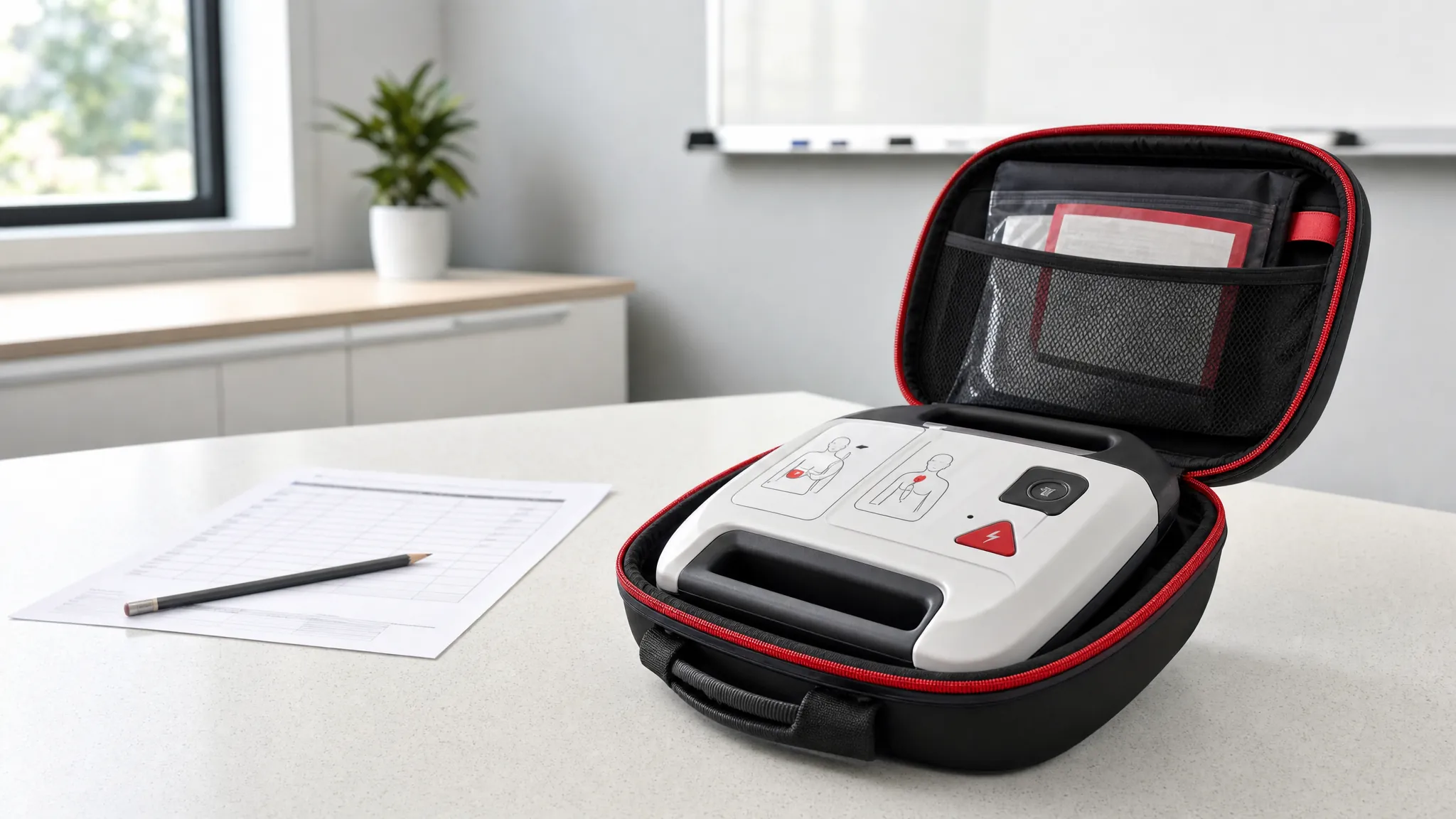
Also check whether a purchase supports the way the AED will be deployed. A front-desk AED, a mobile response kit, and a unit in a gym all have different storage needs. A carry case can be useful when trained staff may bring the AED to a person. A cabinet can be useful when the device needs a stable, known location that visitors can identify. The right package is the one that makes the intended use easy rather than creating a new list of missing parts.
Budget for pads and batteries from the beginning
Every AED program has consumables. Electrode pads and batteries do not last forever, even if the device is never used in an emergency. Their dates should be part of the budget and part of the readiness routine. The American Heart Association’s monthly AED monitoring checklist specifically calls for checking the battery or electrode packet installation and expiration dates.
That is why the cheapest initial device is not automatically the cheapest long-term choice. Ask which pads and battery the model uses, when each is expected to be replaced, and whether a spare set makes sense for the location. The answer varies by manufacturer and configuration, so use the product documentation rather than a generic date range. A current, labeled replacement plan is better than a vague assumption that somebody will notice when something expires.
For a single device in a small space, a calendar reminder and a simple monthly check may be sufficient. For several AEDs across a campus or multiple locations, the operational side deserves more structure: assign an owner, keep a location list, record expiration dates, and decide who approves replacements. The cost of that routine is modest compared with the cost of discovering a missing or expired supply at the wrong moment.
Placement can add cost, but it should improve access
An AED that is hard to find is not fully solving the problem it was purchased to solve. The American Heart Association recommends planning AED placement so one is within a three- to five-minute round-trip walk where possible. That guidance may lead a larger building, school, or recreation facility to buy more than one unit over time. A phased plan is often sensible: begin with the highest-priority area, then add coverage as budget allows.
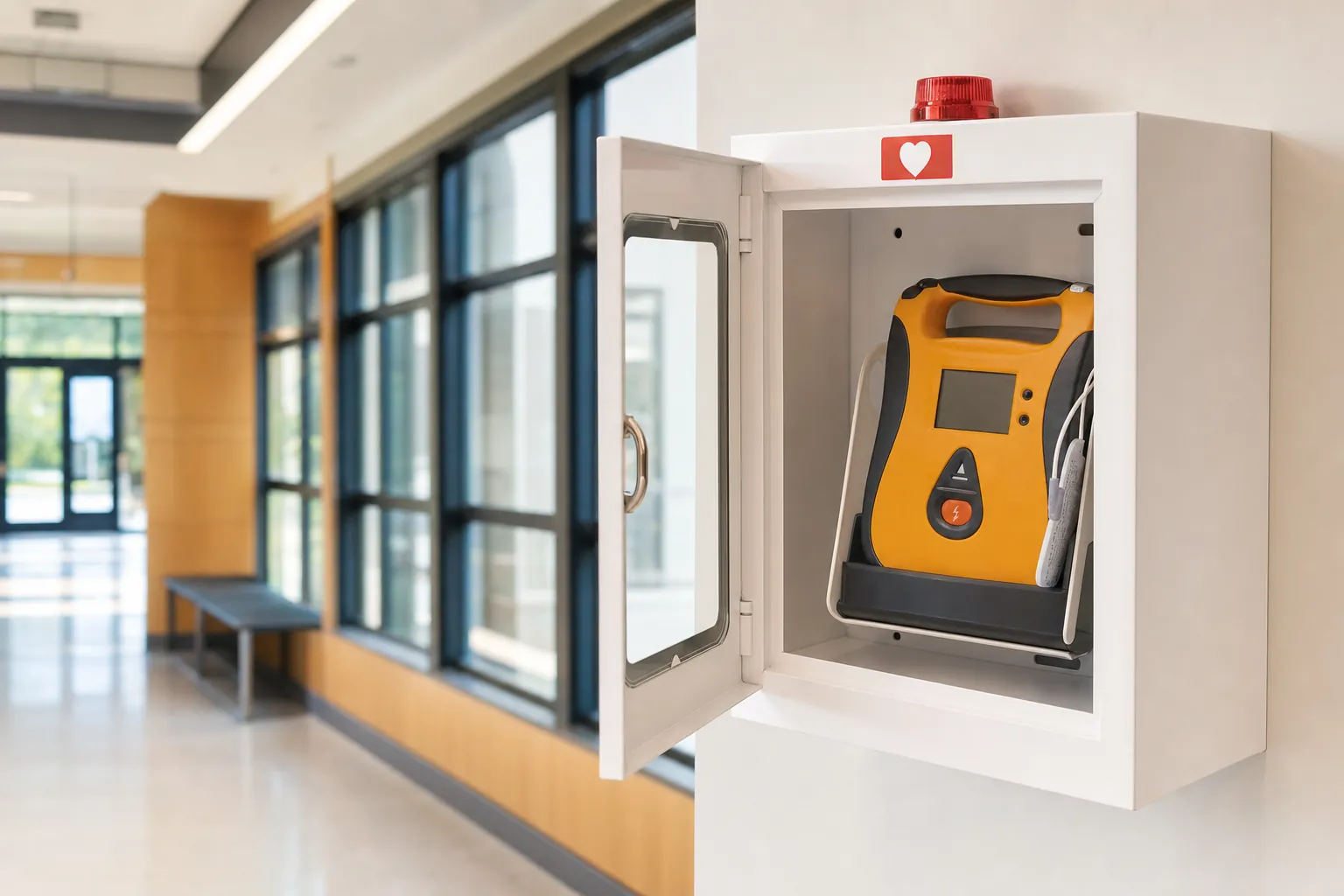
The physical location can create a few additional costs. A wall cabinet, alarmed cabinet, signage, environmental protection, or a dedicated case may be appropriate depending on the building. These are not decorative add-ons. They can make the device easier to spot, help keep it in a known location, and protect it from casual damage or an unsuitable environment. At the same time, a cabinet is not required in every setting. A locked staff room, a mobile response kit, or a secure reception area may call for a different approach.
Before adding cabinet and signage costs, walk the space with a simple question: if a visitor or staff member needed the AED quickly, would they know where to go? If the answer is no, visibility and placement deserve a line in the budget. A small amount spent to make the device accessible can be more valuable than a higher-end feature that nobody can reach in time.
How the setting affects an AED budget
The same AED does not solve every environment in the same way. The device cost may be similar, but the surrounding plan can change substantially. A school has long hallways, changing staff, visitors, and a need to consider pediatric response. A gym or studio may need a unit that is easy for staff to locate during a busy class. A workplace may have several floors, shift changes, or a mix of employees and public visitors. A house of worship or community center may need a plan that works when volunteers, not full-time staff, are on site.
Start by mapping the place, not the catalog. Note where people gather, which entrances are used, where staff are normally stationed, and whether a device would be behind a locked door after hours. The American Heart Association’s planning guidance uses a three- to five-minute round-trip walking benchmark because a well-chosen location matters as much as the device itself. One AED in a central location may be enough for a small site. A larger building may need staged coverage over several budget cycles.
That approach can make a purchase feel more manageable. Instead of delaying an entire program until every building can be covered, an organization can prioritize the busiest or most distant area first, establish the maintenance routine, and create a documented plan for the next device. The budget becomes a readiness roadmap rather than an all-or-nothing shopping list.
New versus refurbished AED costs
A refurbished AED can be a practical way to lower the upfront purchase price, especially for organizations building coverage across more than one location or replacing an older device on a limited budget. The word “refurbished,” however, should lead to more questions, not fewer. Ask how the device was inspected, what is included, the condition and expiration status of pads and batteries, whether the model remains supported, and what warranty or return policy applies.
A professionally prepared refurbished unit is different from an unknown used device. It should have clear product information, a stated condition, and a straightforward path to compatible replacement supplies. AED Ready Now’s refurbished AED collection is a useful starting point for comparing value-focused options alongside new models, but the same readiness questions still apply to every choice.
New equipment can be the cleaner option when a buyer needs the latest model, a particular feature set, or a standardized supply system across several locations. Refurbished equipment can be compelling when it provides a suitable model at a lower initial cost and the buyer can verify its future maintenance path. Neither answer is universal. The better choice is the one that leaves enough room in the budget for supplies, placement, and a consistent inspection routine.
Do not forget training and response planning
The AED is central, but it is not the entire emergency response plan. The American Heart Association notes that AEDs can improve a cardiac arrest victim’s chance of survival and that training is still recommended even when an AED is designed to guide a lay responder. A well-considered purchase therefore includes the people around the device: who will call 911, who will retrieve the AED, who knows the location, and how new staff or volunteers will be introduced to the plan.
Training does not necessarily mean every person needs the same role or the same equipment. A school may keep CPR manikins for regular practice, while a small office may focus on maintaining current training for designated staff. The right level depends on the setting, local rules, and the organization’s existing safety program. The important budget question is whether the device will be supported by a realistic plan for the people who may need to act.
If hands-on practice is part of the plan, use dedicated training equipment rather than the live device. AED Ready Now’s CPR training products include manikins and instructional equipment for organizations that want practice to feel more familiar before an emergency occurs. Keeping training tools separate from response equipment avoids confusion and protects the readiness of the live AED.
What not to cut from the budget
When funds are tight, it is sensible to look for a value-focused model or a professionally refurbished option. It is less sensible to remove the parts of the plan that make the AED usable. Do not assume old pads are fine because they have never been opened, skip the battery check because the indicator looks normal, or store the device somewhere inconvenient simply because there is an empty shelf. Those choices save money only on paper.
The same applies to basic ownership. Someone needs to know where the AED is, what model it is, when the supplies expire, and what happens after an emergency use. That can be a facilities manager, school nurse, office manager, safety committee member, or another designated owner. The title is less important than the clarity. Without a named owner, small tasks tend to become nobody’s task.
There is no need to turn the program into a complicated administrative project. A simple list with the device location, serial number, pad date, battery date, and monthly check date is often enough for a single site. The AED Ready Now Help Center also outlines the practical categories to think through beyond the device itself: pads, batteries, placement, visibility, and training tools. Keep the process visible and repeatable, then make it slightly more formal as the number of devices grows.
Costs after an AED is used
Many buyers focus on keeping an unused AED ready, but it is also worth asking what the replacement process looks like after the device is deployed. Pads used in a response generally need to be replaced. Depending on the model and what occurred, batteries or other supplies may also need attention. The device should be returned to a ready state promptly and reviewed according to the manufacturer’s instructions and the organization’s response plan.
A simple post-use plan avoids an awkward gap where everyone assumes the AED has been handled. Identify who will place a replacement order, who will update the readiness record, and who will tell staff that the unit is back in service. For organizations with more than one AED, a spare pad set or a backup device may be appropriate. That decision depends on the level of coverage required, but it should be deliberate rather than improvised after an event.
This is another reason to choose a model with a clear supply path. A modest saving at purchase is not very helpful if the organization cannot confidently source compatible replacement parts later. Ask the seller to identify the correct consumables and keep those details with the AED records. It turns a one-time purchase into a maintainable system.
How to judge value without overspending
Value does not mean choosing the most expensive AED, and it does not mean choosing the least expensive one. It means paying for the capabilities that remove real friction in your setting. A clear comparison starts with the same few questions for every model: Will an untrained bystander understand the prompts? Does the device have the adult and pediatric response option your site needs? Can the team check its status easily? Are the future pads and batteries straightforward to order? Is there a practical way to keep it visible and protected?
Once those needs are covered, additional features should earn their place in the budget. A visual display may be valuable in a noisy environment. CPR feedback may be valuable for a team that wants more real-time coaching during a response. A compact case may be valuable for a mobile team. A simplified pad system may be valuable for a setting that serves both children and adults. The right feature is the one that makes action more likely and maintenance easier, not the one with the longest specification list.
Be careful about buying an AED only because another organization chose the same model. Their location, population, budget cycle, and staffing may be completely different. A good comparison is grounded in your own building and response plan. Use broad recommendations as a starting point, then confirm the details against the product documentation and the needs of the people on site.
Getting approval for the purchase
Most AED purchases need a clear explanation for an owner, principal, board, facilities team, or finance contact. A short, complete proposal travels farther than a vague request for safety equipment. State the setting, the number of devices being proposed, the location for each one, the model options considered, what each package includes, and the expected ongoing supplies. Include the person who will own the monthly check. That gives the decision-maker a complete picture of the investment and the plan for keeping it ready.
When budget is the obstacle, show practical phases instead of reducing the first setup below readiness. For example, a facility might place one complete AED package in its highest-priority location this year, add a second area next year, and keep both on the same inspection schedule. The proposal should be candid about what is covered today and what is planned later. A phased plan is easier to approve when it is concrete.
It can also help to distinguish between a device that will protect an existing group and a device that supports a broader public-facing responsibility. The first may be an operational purchase; the second may support a larger safety or risk-management plan. In either case, a clean budget that includes equipment, placement, and maintenance is more likely to be approved than a low device price followed by later add-ons.
A simple way to build an AED budget
A useful budget does not need to predict every future expense down to the dollar. It needs to make the major decisions visible before they become surprises. Start with the device, then add only the items your setting actually requires. For a first draft, build four lines:
- Device and included accessories. Record the AED model, the price, and exactly what comes in the package.
- Readiness supplies. Note the included pads and battery, expected replacement timing, and whether a spare set is appropriate.
- Placement. Include a cabinet, signage, case, or protective storage only where it materially improves visibility or fit.
- People and process. Include training materials, staff training, and the simple inspection process that keeps dates and locations current.
Then distinguish between startup costs and planned future costs. The device, cabinet, and initial supplies are usually part of the first purchase. Replacement pads, batteries, and refresher training happen later. Separating those categories helps a decision-maker understand what must be approved now and what should be kept on an annual readiness calendar.
It also makes comparisons fair. Instead of asking “Which AED is cheapest?” the question becomes “Which complete setup best fits this space and remains practical to maintain?” That is a much better buying question. It gives the organization permission to choose a simpler model where simplicity is enough, or to invest in features that solve a real problem for the people who will use it.
A budget example without the guesswork
Imagine a small business with one public reception area and twenty employees. Its first draft may include one AED, the supplies included with that model, a cabinet or visible storage solution, a wall sign, and a reminder system for expiration dates. If the building is compact and the reception area is consistently staffed, that may be a sensible first phase. The comparison should show the total cost of that complete setup, not simply the device price.
Now imagine a school with a main building, athletic space, and events that draw families after hours. The purchase may require more planning around access, distance, training, and coverage. The school may decide to begin with the highest-traffic location, use a cabinet that is easy to find, and schedule a second device as a future budget item. It might also include dedicated training manikins so staff can practice the broader response plan. The AED itself is still a large part of the cost, but it is no longer the only line that matters.
In both examples, the buyer is not trying to create a perfect forecast. They are making the first purchase complete, then writing down the future dates and expansion decisions that should not be forgotten. That is enough to make a budget both credible and useful.
Questions to ask before choosing an AED
Before finalizing a purchase, bring the following questions to the comparison. They turn a broad price range into a decision that fits the actual location:
- Who is the AED intended to protect, and where will it be located?
- Will responders benefit from a visual display, CPR feedback, or a particular pediatric setup?
- What pads and battery does the model use, and how will their expiration dates be tracked?
- Does the quoted price include the items needed to place the AED into service?
- Does the space need a cabinet, signage, or protective storage?
- Who will perform a quick monthly readiness check and order replacements?
- Would a new or refurbished model make the most sense for this budget and coverage plan?
These questions also make it easier to request a useful quote. Rather than simply asking for “an AED,” describe the setting, how many locations need coverage, whether you are comparing new and refurbished equipment, and any features you already know matter. That gives the seller the context needed to suggest a complete, practical option.
When to revisit the budget
An AED budget should be revisited whenever the site changes in a way that affects access or ownership. A move to a larger suite, a renovation, a new athletic space, a growing staff, a change in public hours, or a second location can all change where an AED should be placed and who is responsible for it. Review the device list and locations at the same time as those operational changes rather than treating the AED as a fixed asset that never needs attention.
The same is true when pads or batteries approach their replacement dates. Use the replacement event as a short check-in: Is the device still in the best location? Is the cabinet easy to find? Are the inspection records current? Do the people who work nearby know the response plan? This keeps maintenance from becoming a narrow supply-order task and turns it into a practical readiness review.
For buyers planning several devices, a simple annual review can also reveal where standardizing models would make future purchasing easier. Standardization can simplify training, consumable ordering, and recordkeeping, but it should not override the needs of a particular location. The right decision is still the one that keeps each AED accessible, supported, and ready.
How AED Ready Now can help
AED Ready Now is built around helping buyers compare clear options instead of sorting through equipment alone. You can browse the new AED collection, compare value-focused refurbished choices, and use the product pages to review current descriptions and pricing. For a setting with specific needs, the quote request form is the place to share the location, priorities, and models under consideration.
The best outcome is not just a device in a cart. It is an AED setup that fits the space, has a plan for its supplies, and is clear enough for people to find and use. A realistic budget gives that outcome a better chance than a low headline price ever could.
Frequently asked questions
What is a typical AED price?
The device itself commonly costs about $1,200 to $3,000, depending on the model, included accessories, and support. The full budget should also account for pads, batteries, placement, and routine readiness checks.
Are refurbished AEDs less expensive?
They can be. A professionally refurbished AED may reduce the upfront purchase price, but buyers should still confirm the unit condition, included accessories, battery and pad status, warranty, and the availability of future replacement supplies.
Do AEDs have ongoing costs?
Yes. Pads and batteries have expiration dates, and some settings need a cabinet, signage, spare supplies, or a structured inspection process. Those costs are part of keeping the AED ready, not optional extras.
Does an AED need to be purchased with a cabinet?
Not always. A cabinet can be useful when it improves visibility and protects a device in a shared public space, but the right choice depends on the location, security needs, and the model’s storage guidance.