AED placement is not just a question of finding an empty wall. The right location helps a staff member, visitor, volunteer, or bystander find the device quickly, bring it to the person who needs it, and return to the response without losing time to a locked door, a long hallway, or uncertainty about where the AED lives. A visible device in a practical location is far more useful than a better-equipped device hidden in the wrong room.
For most workplaces, schools, gyms, houses of worship, and community facilities, the best starting point is simple: map where people gather, identify the routes people actually use, and test whether someone can retrieve the AED without special knowledge or a key. The American Heart Association's cardiac arrest guidance emphasizes the need for a fast response, while the U.S. Food and Drug Administration's AED overview explains that an AED is a portable device designed to analyze a heart rhythm and guide a rescuer during a suspected cardiac arrest. Placement is what makes that portable device available when it matters.
Start with the place, not the product list
Before comparing cabinets, signage, or AED models, walk the site as if you are unfamiliar with it. Start at the main entrance, the busiest room, the farthest work area, the athletic space, and any location used after normal business hours. Notice where people naturally look for help, where staff usually are, and where a visitor could get stuck.
This exercise often reveals more than a floor plan. A reception desk may be central during the day but closed in the evening. A staff room may be convenient for employees but inaccessible to the public. A device near a loading area may be close to one team yet too far from the public-facing side of the building. The goal is not to identify one universally perfect wall. It is to choose the location that gives the people in your building the clearest, fastest path to the AED.
For a small office, that may be a main hallway near reception. For a school, it may mean coverage near a gym, cafeteria, or athletic entrance rather than placing every device in an administrative area. For a church or community center, think through weekday staff, weekend volunteers, events, and rooms that remain open after the office is closed. A gym should consider the workout floor, courts, studios, pool area, and the staff positions that change throughout the day.
Test the retrieval route in real conditions
A location can look sensible on a map and still fail in practice. Test it. Ask a person who does not normally manage the AED to start from a likely gathering area, find the device, bring it back, and describe what slowed them down. Run the same check during the hours when the building is busiest, when reception is unattended, or when an after-hours event is taking place.
Look for friction that a familiar employee might overlook. Is the AED behind a closed door? Does the route cross a security checkpoint? Is there a stairway, elevator delay, or narrow corridor? Is the cabinet near another red wall box that could cause confusion? Can a person see the sign from the natural approach route? A placement plan should survive ordinary building conditions, not just a quiet walkthrough on a weekday morning.
When a route is too long or uncertain, a second AED may be more valuable than trying to make one device cover every part of a large building. The decision depends on the layout, the number of people present, the distance between activity areas, and the way the property is used. A phased plan can be a sensible answer: place the first complete setup in the highest-priority area, establish the inspection routine, then add coverage as budget and building needs require.
Choose a visible, accessible location
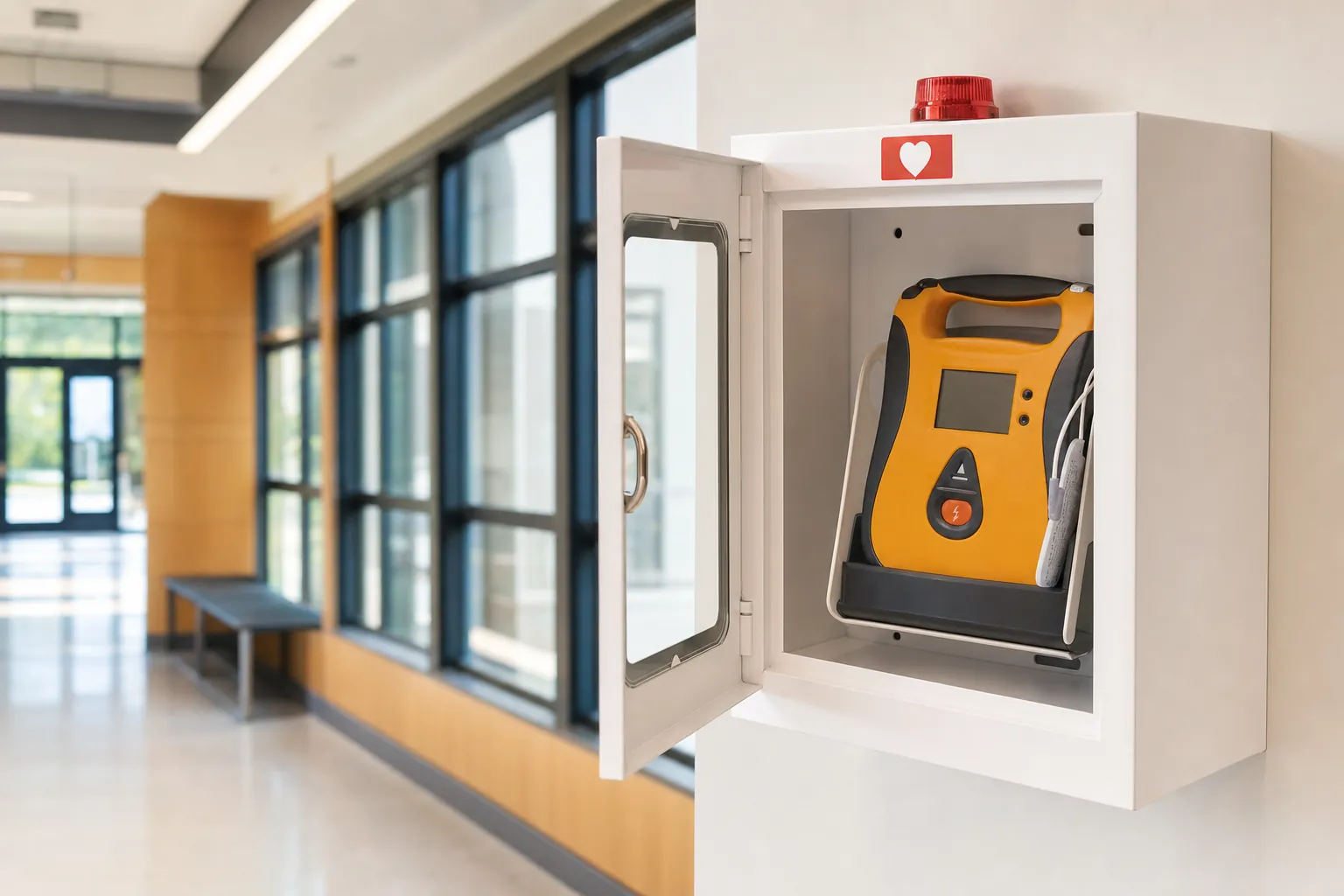
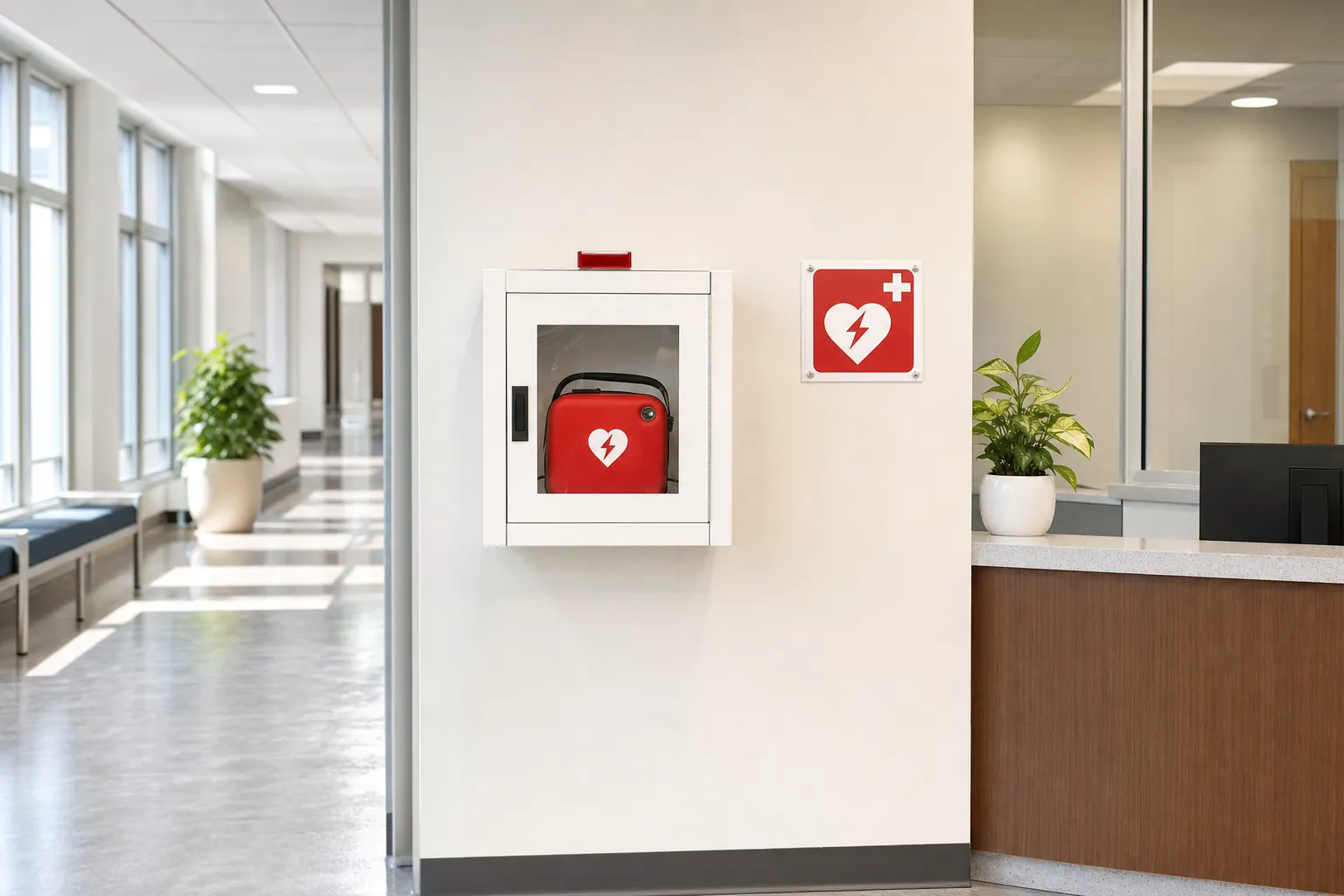
An AED should be easy to spot without asking for directions. A main corridor, lobby, reception area, gym entrance, break area, or other clear shared space is usually easier to support than a private office, storage room, or locked closet. Keep the device at a height and location that ordinary adults can reach, and leave clear space around it so furniture, displays, boxes, or seasonal decorations do not block the cabinet.
Visibility is part of the response plan, not an afterthought. A properly chosen AED cabinet or mounting option can give the device a stable, known home. Appropriate wall signage can help people notice the location from down a hallway or when approaching from a different direction. Whether the cabinet needs an alarm, a strobe, or extra environmental protection depends on the location, but every setup needs a clear way for people to recognize that the AED is there.
Do not make the cabinet more secure than the situation requires. Security has a role, especially in public, outdoor, or high-traffic locations, but access is still the point. A device that requires someone to find a key, call a manager, or wait for a locked office to open creates a serious delay. If the AED must be in a controlled area, document who has access, how after-hours users will retrieve it, and whether another location would remove that barrier.
Match the storage to the environment
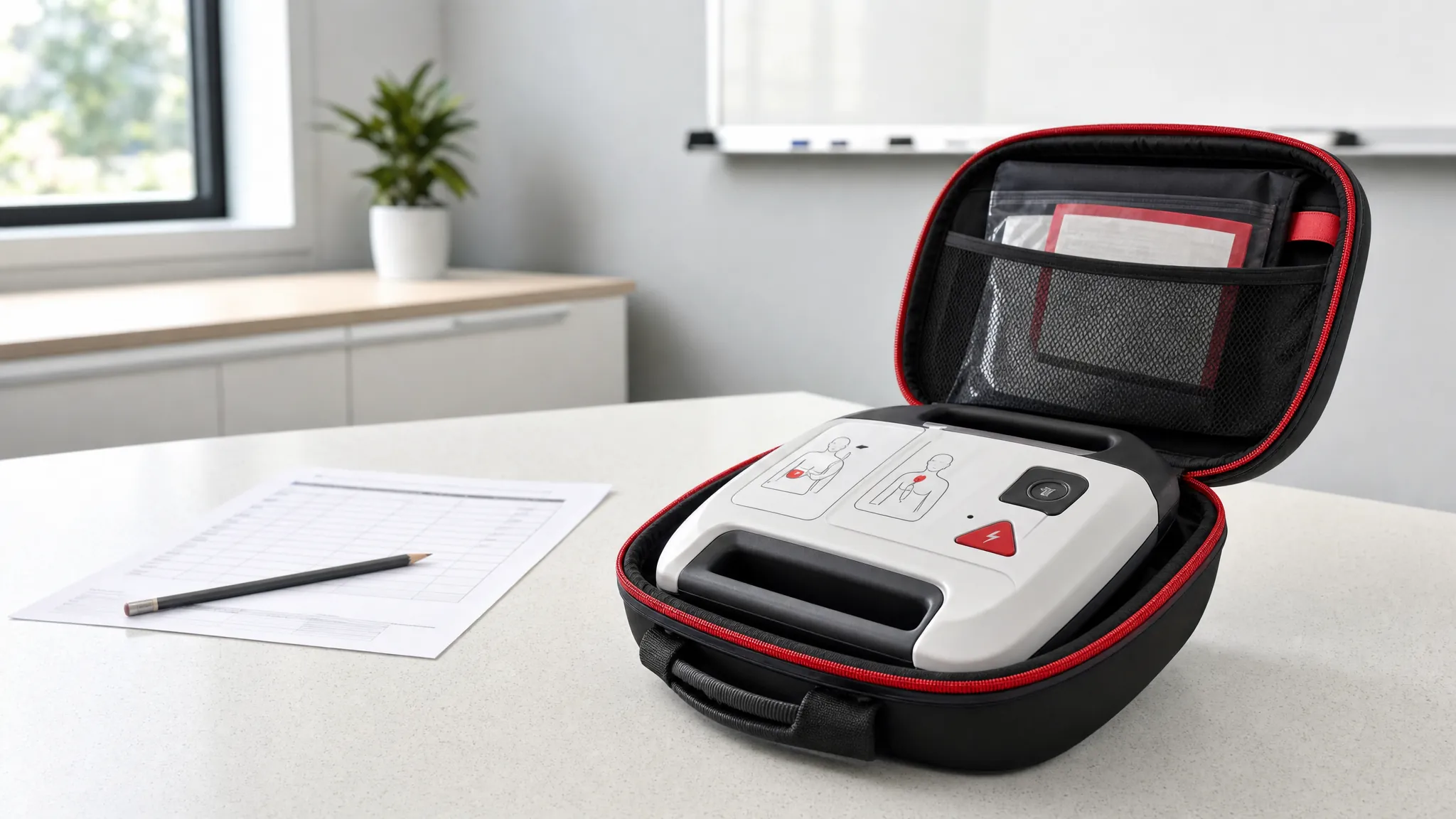
Indoor office space, a humid pool area, an outdoor athletic venue, and a mobile response kit do not have the same storage needs. Start with the AED manufacturer's instructions for temperature, moisture, cleaning, and storage. Then choose a cabinet, case, bracket, or protective option that supports the actual environment rather than treating every wall location as interchangeable.
A standard cabinet can work well for a protected indoor hallway. A location exposed to weather, heat, cold, dust, or high humidity may need a more specialized enclosure and a closer review of the device guidance. A mobile team may need a case that moves with designated staff rather than a fixed wall cabinet. The important point is to protect the AED without making it difficult to find or retrieve.
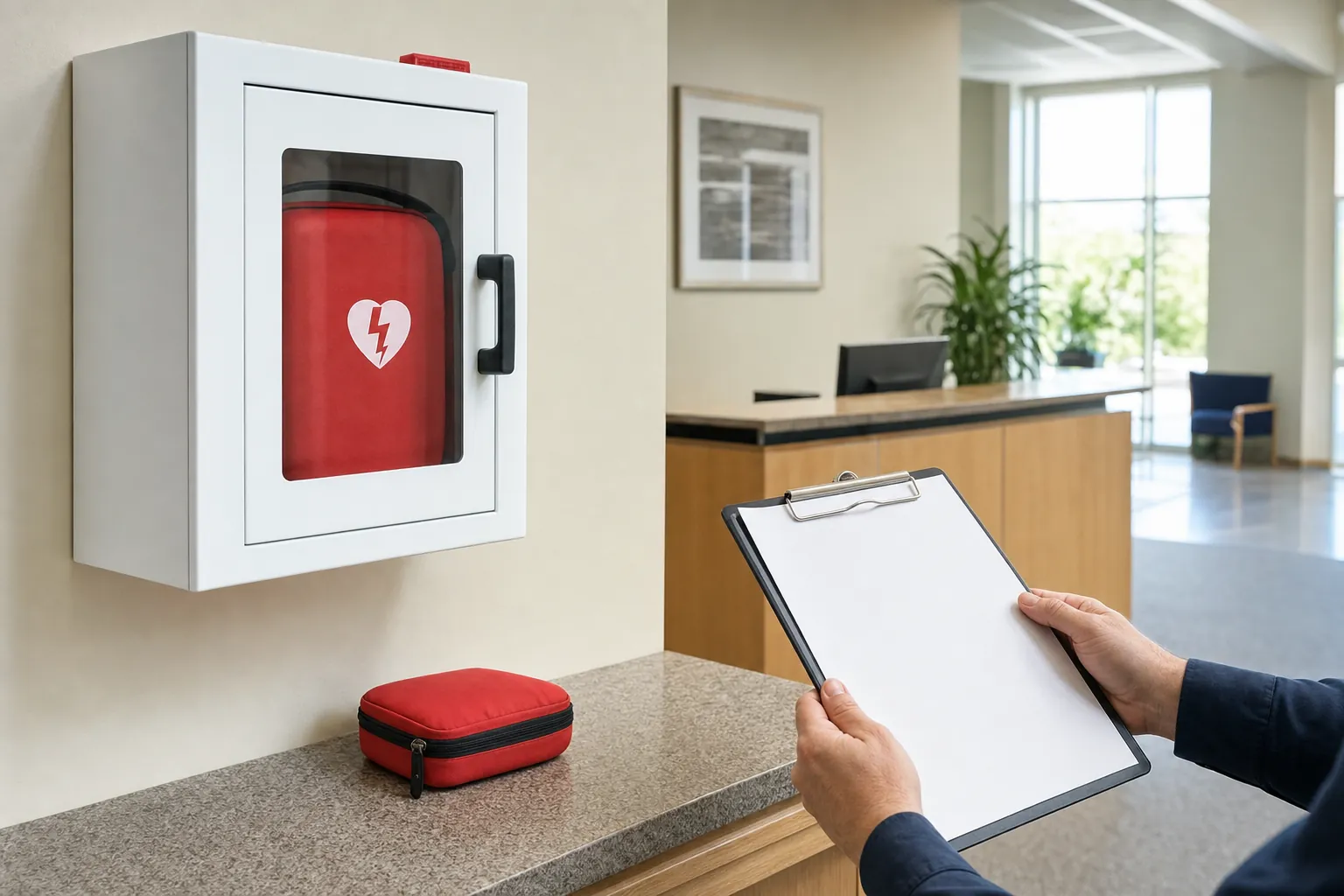
This is also a useful moment to think beyond the device. The AED needs current pads, a working battery or cartridge, and any location-specific supplies the manufacturer's instructions call for. The AED maintenance checklist explains how to track those details once the device is in place. Choosing storage and supplies together prevents a setup where the AED is visible but its accessories are missing, expired, or stored somewhere else.
Plan for the people who use the building
Good AED placement follows how a property is really used. A school may need to account for students, staff, visitors, sporting events, and separate buildings. A workplace may have shifts, warehouses, different floors, or visitors who do not know where first-aid equipment is kept. A community organization may rely on volunteers who are present only at certain times. A facility with public programs needs to assume the person retrieving the AED may not be an employee.
Write down the main scenarios that could change access. What happens after 5 p.m.? During a weekend event? When the front desk is empty? When a gym class is in progress? During a school game or a crowded service? When a keyholder is absent? A plan that answers these questions is more useful than one that only states the cabinet location.
It can help to assign simple roles. One person calls 911, one retrieves the AED, another begins CPR when appropriate, and a designated owner keeps the location and supplies current. Those roles do not need to turn every employee into an emergency professional. They simply make the first actions easier to understand while responders follow the device prompts and emergency dispatcher's guidance.
Use training to check whether the placement works
Training is one of the fastest ways to expose a weak placement plan. During a CPR and AED practice session, ask participants to identify the AED location, retrieve it, and explain who would take the next role. The American Red Cross's AED response steps are a useful reminder that the device supports a wider sequence of calling for help, applying pads, allowing analysis, and resuming CPR as instructed.
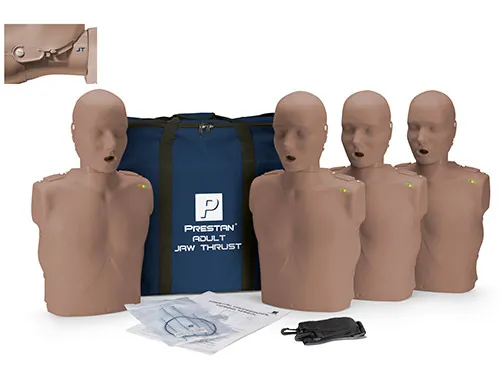
A short drill may show that the sign is hard to notice, a cabinet door is confusing, a hallway becomes crowded, or no one knows which device belongs to the athletics area. Fixing those issues is usually easier than discovering them during an emergency. Use dedicated CPR training equipment for practice rather than relying on the live AED. That lets a team rehearse the route and responsibilities without affecting the readiness of the device in service.
Keep the drill practical. A five-minute walkthrough with the people closest to the AED is often more useful than a complicated exercise that nobody repeats. Update the plan when the building changes, a department moves, a new entrance opens, a renovation blocks a route, or a second AED is added.
A practical AED placement checklist
Before finalizing a location, walk through this short checklist with the people responsible for the building:
- Is it easy to see? The device is in a shared, recognizable area with clear signage where needed.
- Is it easy to reach? The AED is not behind a locked door, restricted desk, or obstacle that could delay retrieval.
- Does it cover real activity areas? The location reflects where people gather, work, exercise, study, worship, or attend events.
- Does the route work after hours? The plan still makes sense when reception, offices, or usual staff positions are unavailable.
- Is the storage appropriate? The cabinet, case, or enclosure fits the environment and the AED manufacturer's instructions.
- Are supplies and ownership clear? The device has current supplies, a named owner, and a simple inspection record.
- Has someone tested it? A person who did not choose the location can find and retrieve the AED without coaching.
For a small location, one well-placed AED and a simple monthly check may be enough. For a larger facility, the same checklist can identify where coverage is thin and help prioritize the next device. It turns a vague concern about placement into a decision that can be explained to a manager, board, facilities team, or budget owner.
Review placement when the building changes
AED placement should be reviewed whenever the way people use the site changes. A renovation, new suite, added athletic area, change in public hours, new tenant, different front-desk arrangement, or expanded event schedule can make an old location less practical. Include the AED map in those operational conversations so it is not forgotten behind a cabinet door.
Use the regular readiness check as a quick placement check, too. Is the cabinet still visible? Is the hallway still clear? Does the sign still point from the right direction? Are staff and volunteers aware of the location? The American Heart Association's AED program checklist is a helpful reference for keeping ownership, readiness checks, and follow-up clear. The goal is not to create paperwork for its own sake. It is to catch the small changes that can make a good plan harder to use.
How AED Ready Now can help
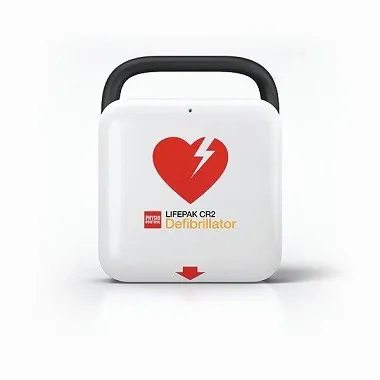
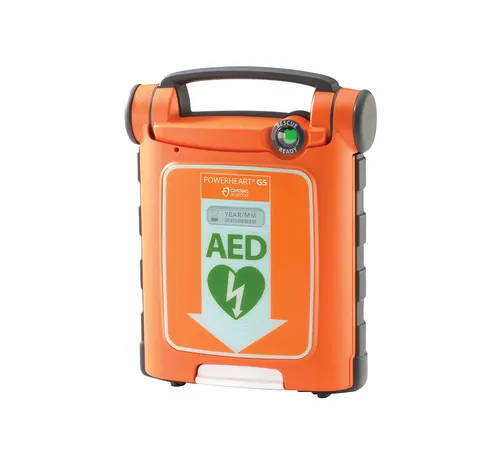
AED Ready Now can help you build the complete setup around the location you are protecting. Start by comparing new AEDs and Encore Series AEDs, then review AED cabinets and mounting options that support a visible, organized placement plan.
For a school, workplace, gym, church, or multi-area facility, use the quote request form to share the building layout, number of locations, access concerns, and the models you are considering. A useful AED setup is not just a device selected from a catalog. It is a device people can find, reach, and keep ready.
Frequently asked questions
Where is the best place to put an AED?
Choose a visible, easy-to-reach shared area near the people and activity spaces the device is meant to protect. Test the retrieval route during normal and after-hours conditions before treating a location as final.
Should an AED be kept in a locked cabinet?
A cabinet can help protect and identify an AED, but it should not create a delay. If a location requires controlled access, make sure the people likely to respond can retrieve the device without searching for a key or waiting for an office to open.
How many AEDs does a building need?
The answer depends on the building layout, the distance between activity areas, the number of people present, and whether one device can be reached quickly from the places where people gather. A larger site may need a phased plan with more than one AED.
Should an AED be near a reception desk?
Reception can be a strong location when it is central, visible, and staffed whenever the building is in use. If the desk is closed after hours or only serves one part of a larger property, add another accessible location or adjust the plan.
Do AED placement rules differ for schools and gyms?
The core principles are the same: visibility, access, appropriate storage, and a tested retrieval route. Schools, gyms, and other active settings often need extra attention to separate activity areas, events, changing staff positions, and after-hours access.