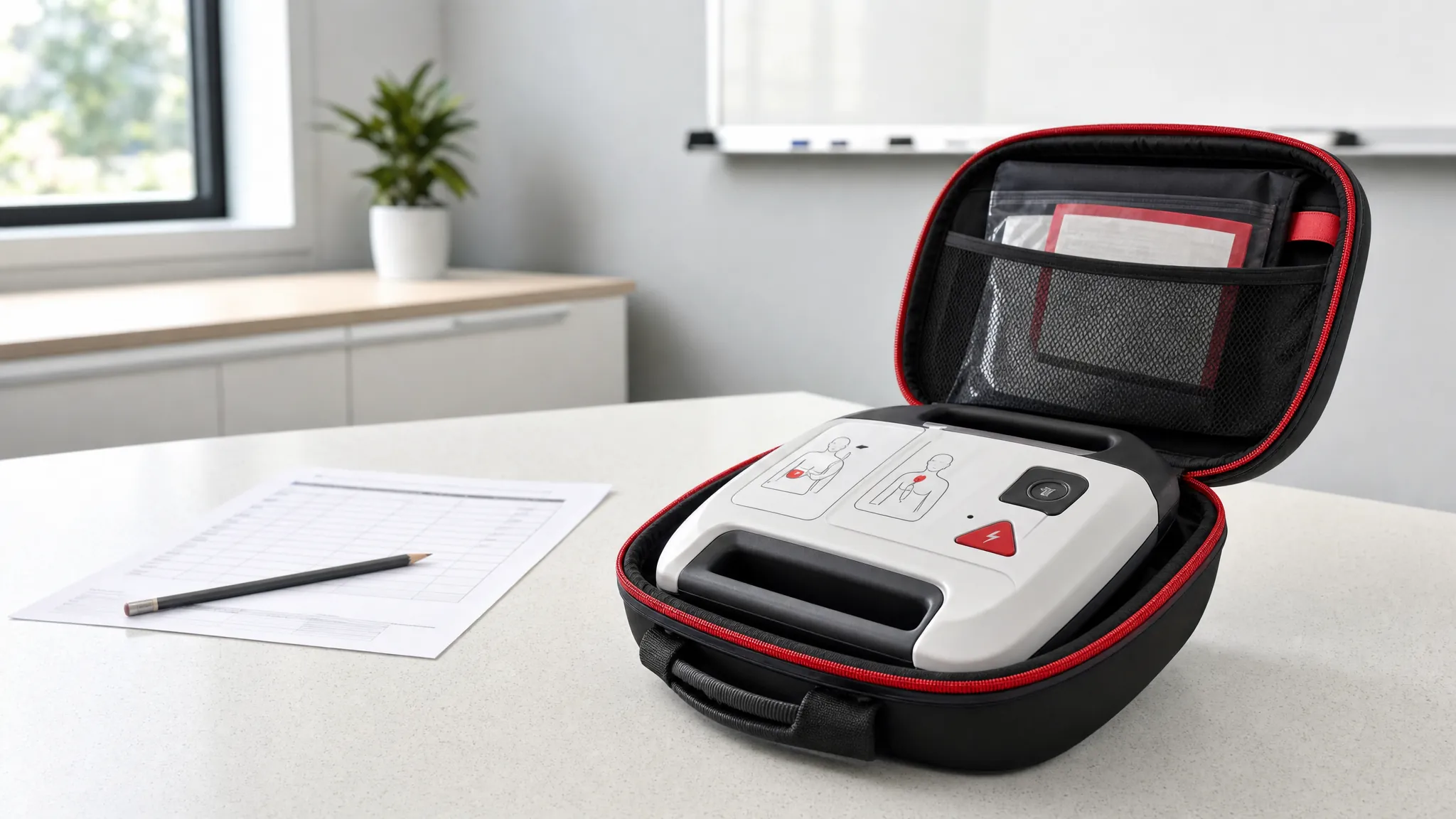
An AED is a defibrillator, but not every defibrillator is an AED. That small distinction matters when a workplace, school, gym, or community organization is deciding what equipment belongs in its emergency plan. The AED is the portable, public-facing version designed to guide a bystander through a possible sudden cardiac arrest. The broader word “defibrillator” also includes equipment used by trained clinical teams and devices implanted inside a patient’s body.
For most organizations buying equipment for a shared space, the practical answer is straightforward: an AED is the type of defibrillator to compare. It is built to assess a heart rhythm, advise whether a shock is appropriate, and guide the rescuer through the response. The U.S. Food and Drug Administration describes AEDs as portable, lifesaving devices for people experiencing sudden cardiac arrest, and notes that CPR combined with early defibrillation is effective in the first minutes after a collapse. Read the FDA’s AED overview for the clinical context.
Defibrillator is the umbrella term
A defibrillator is equipment that can deliver an electrical shock to help restore an effective heart rhythm in certain emergencies. That describes a category, not one single product. The category includes public-access AEDs, manual external defibrillators used by healthcare professionals, wearable devices prescribed for particular patients, and implantable cardioverter defibrillators placed inside the body.
This is why product research can become confusing. A shopper may search for “defibrillator” and see hospital equipment, patient-specific medical devices, and compact AEDs side by side. They are related by the same broad purpose, but they are not interchangeable products. A medical team may use manual equipment in a controlled clinical setting; a facility manager needs a device that helps an everyday responder act quickly while emergency services are on the way.
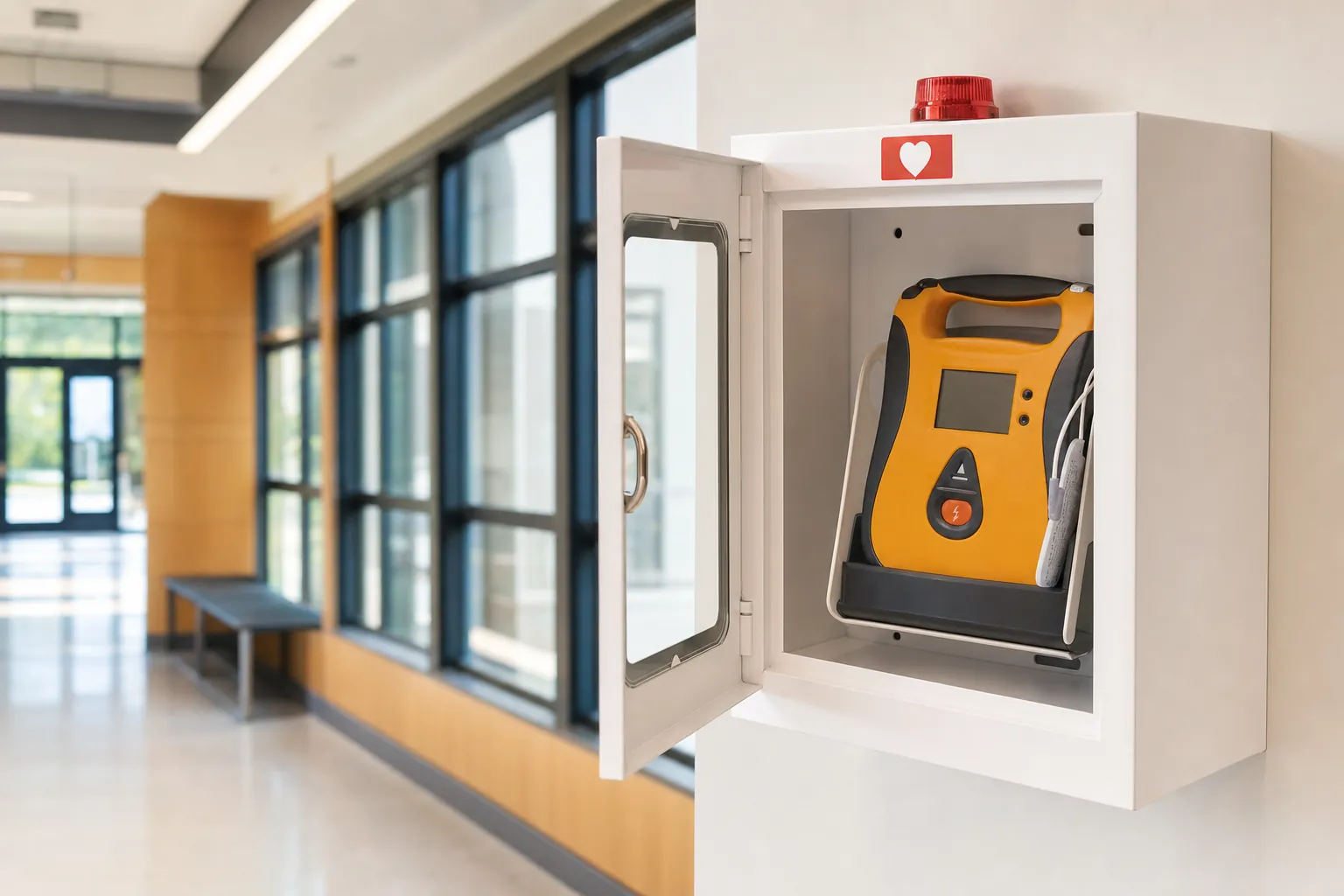
For an organization that needs equipment on a wall, in a reception area, on an athletic field, or in a response kit, the relevant question is usually not “Which defibrillator?” It is “Which AED is practical for this setting, and how will we keep it ready?” That keeps the decision focused on accessibility, clear prompts, compatible supplies, placement, and routine checks rather than on equipment intended for a different kind of responder.
What makes an AED different?
AED means automated external defibrillator. “External” means the pads are applied to the person’s chest from outside the body. “Automated” means the unit analyzes the heart rhythm and decides whether a shock is advised. The rescuer follows the device’s voice and visual prompts instead of trying to interpret a rhythm independently.
That built-in analysis is the key difference for public access. MedlinePlus explains that AEDs are special defibrillators that untrained people can use when they suspect sudden cardiac arrest, because the devices are programmed to give a shock only when they detect a dangerous rhythm. Its sudden cardiac arrest guidance is a helpful reminder that an AED is designed to support, not replace, the emergency response system.
An AED still requires a person to start the response. Someone needs to call 911, begin CPR when appropriate, retrieve the device, apply the pads, and follow each prompt. The automation removes the need for a lay responder to decide whether a rhythm is shockable. It does not mean the device works by itself or that it should be hidden away as a piece of equipment nobody is expected to use.
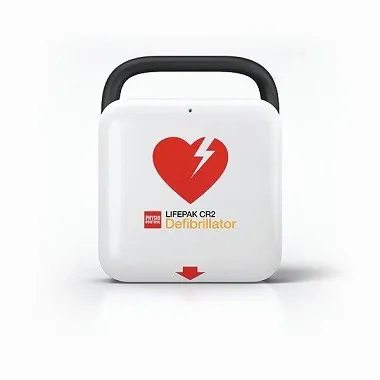
AEDs and manual defibrillators are made for different responders
Manual external defibrillators are generally used by trained healthcare professionals, such as paramedics or hospital teams. They give the clinician more direct control and rely on medical training to interpret the patient’s condition, select treatment settings, and coordinate the response. They are not the typical choice for a school hallway, office lobby, fitness studio, or community facility.
An AED takes a different approach. It is designed for a lay responder or a person with basic training, so it provides step-by-step prompts and rhythm analysis. Depending on the model, it may have clear icons, spoken instructions, a metronome or feedback features, and a semi-automatic or fully automatic shock process. The right device is not the one with the most clinical controls. It is the one that makes the correct response easier in the place where it will actually be used.
This distinction also helps with purchasing conversations. A board, school administrator, or business owner does not need a lesson in hospital equipment to approve a responsible AED plan. They need to understand that a public-access AED is selected for availability and ease of use, while clinical defibrillators serve trained teams in very different environments.
Automatic and semi-automatic AEDs
Within the AED category, buyers may see automatic and semi-automatic models. Both analyze the heart rhythm. A semi-automatic AED tells the rescuer when a shock is advised and requires the person using it to press the shock button after everyone is clear. A fully automatic AED gives clear warnings, then delivers the shock itself when the analysis determines it is needed.
Neither format is automatically right for every location. Some teams prefer the deliberate confirmation step of a semi-automatic device. Others prefer a fully automatic unit because it removes one action in a stressful moment. The important thing is to understand the model’s instructions, make sure the people responsible for the AED know where it is, and provide training that matches the organization’s response plan.
The American Red Cross’s AED steps overview shows the common sequence: allow the device to analyze, make sure no one is touching the person, deliver a shock if advised, and resume CPR. The device’s prompts lead the process, but the surrounding plan still matters.
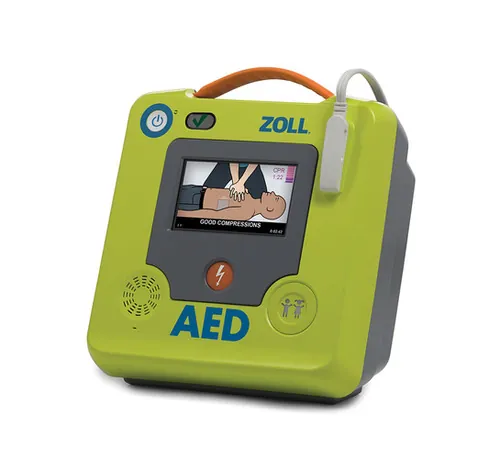
What an AED can and cannot do
An AED is meant for a suspected sudden cardiac arrest when a person is unresponsive and not breathing normally. It analyzes the rhythm after the pads are applied and guides the responder if a shock is advised. It does not diagnose every medical emergency, and it does not deliver a shock simply because someone has fainted, has chest pain, or is having a heart attack.
That point is worth making clearly because “heart attack” and “cardiac arrest” are often used as if they mean the same thing. They are not the same event. A heart attack is a circulation problem caused by blocked blood flow to heart muscle. Sudden cardiac arrest is an electrical problem that causes the heart to stop pumping effectively. A heart attack can sometimes lead to cardiac arrest, but an AED should be used by following the emergency dispatcher’s guidance and the device’s prompts, not by trying to diagnose the event alone.
An AED also does not replace CPR, calling 911, or trained medical care. The American Heart Association’s CPR guidance emphasizes the role of CPR and quick access to an AED in a cardiac arrest response. For a buyer, the useful takeaway is simple: the device belongs in a complete response plan, not in a cabinet with no ownership or practice behind it.
How to choose the right AED for a shared space
Once the terminology is clear, focus on the setting. A small office, a school with athletic facilities, a house of worship, a gym, and a multi-floor workplace may all need an AED, but the practical details will differ. Start with the people who may be present, where they gather, how far someone would need to travel to retrieve the device, and who will check it each month.
Then compare the models on the choices that affect readiness. Look at the clarity of prompts, adult and pediatric response options, the battery and pad system, case or cabinet needs, any feedback features that matter to your team, and the availability of replacement supplies. A good comparison does not begin with a long feature list. It begins with the real location and the person who may need to retrieve the AED under pressure.
It also helps to compare the full setup rather than only the device price. The AED needs current pads, a working battery, a visible storage plan, and a named person or team to check it. The site’s AED cost guide walks through those ongoing parts of the budget so buyers can compare complete packages fairly.
New and refurbished AEDs can both be sensible options
The word “AED” does not tell you whether a device is new or refurbished. That is a separate buying decision. A new AED may be the right fit when an organization wants the latest available model or needs to standardize devices across locations. A professionally refurbished AED may be a useful value-focused option when the listing clearly states the model, condition, included accessories, warranty or return terms, and the path for future pads and batteries.
The same readiness questions apply either way. Confirm the current supply status, how the AED was prepared, which consumables it uses, and who will track those dates. A lower upfront cost is only useful when it leaves the organization with a dependable, supported setup rather than a device that is difficult to maintain.
AED Ready Now’s refurbished AED collection gives buyers a way to compare value-focused options alongside the new AED collection. The useful next step is to compare each option against the same location, coverage, and maintenance needs rather than treating “refurbished” as a shortcut for every budget.
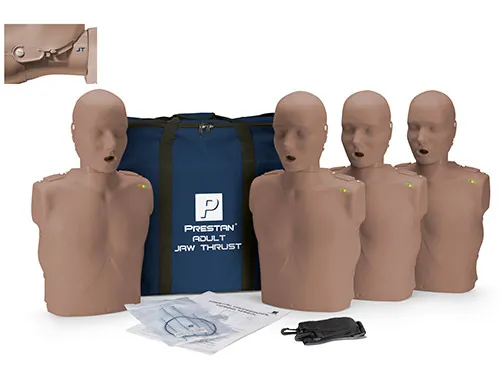
Training turns a device into a usable plan
AEDs are designed to guide users, but training still builds speed and confidence. The people closest to the device should know its location, who calls 911, who retrieves the AED, and what happens when a new employee or volunteer joins the organization. A short practice session can reveal simple problems, such as a device that is hard to find, an AED behind a locked door, or a team that does not know who owns the monthly check.
Use dedicated training equipment for hands-on practice rather than opening or relying on the live device. AED Ready Now’s training products include tools for CPR and AED practice, which can make a response plan easier to rehearse before it is needed. Training should complement the device prompts and local emergency procedures, not encourage anyone to delay calling for professional help.
For many organizations, the most durable plan is uncomplicated: place the AED where people can find it, make the location known, keep pads and batteries current, designate an owner, and refresh the team’s familiarity over time. That is more useful than treating the AED as a one-time purchase that disappears into the background.
How AED Ready Now can help
AED Ready Now helps organizations move from a broad search for a defibrillator to a practical AED decision. You can compare new AEDs, review current refurbished options, and use the product pages to understand the equipment and accessories included with each listing.
When your setting has specific needs, use the quote request form to share the location, number of areas that need coverage, and the options you are comparing. A clear plan for placement, supplies, and ownership makes it easier to choose an AED that fits the people who rely on it.
Frequently asked questions
Is an AED the same as a defibrillator?
An AED is one type of defibrillator. It is a portable automated external defibrillator designed to analyze a heart rhythm and guide a bystander during a suspected sudden cardiac arrest.
Can anyone use an AED?
AEDs are designed to guide lay responders with voice and visual prompts. Calling 911 and following the device instructions are essential, and training can help people respond with greater confidence.
What is the difference between an AED and a manual defibrillator?
An AED analyzes the rhythm and guides the user, which makes it suitable for public-access settings. Manual defibrillators are typically used by trained clinical or emergency professionals who need direct control during care.
Does an AED shock every person who collapses?
No. After the pads are applied, the AED analyzes the heart rhythm and advises a shock only when it detects a rhythm the device is designed to treat.
Should a business choose a new or refurbished AED?
Either can be a sensible choice when the device fits the setting and has a clear supply and maintenance path. Compare the model, condition, included accessories, replacement pads and batteries, and support before deciding.