
An AED cabinet does more than hold a device on a wall. It gives the AED a clear, consistent home, helps people spot it, and can protect it from the everyday conditions of the building. The best cabinet is not automatically the one with the most features. It is the one that fits the AED, suits the environment, stays easy to reach, and supports a response that does not depend on finding a key or asking for directions.
Start with the location, then choose the storage. The U.S. Food and Drug Administration’s AED overview explains that an AED is a portable device designed to analyze a heart rhythm and guide a rescuer during a suspected cardiac arrest. The cabinet should make that device easier to find and retrieve, not add a new obstacle. The site’s AED placement guide is a useful first step for testing the routes people actually use.
Start with the AED and the wall space
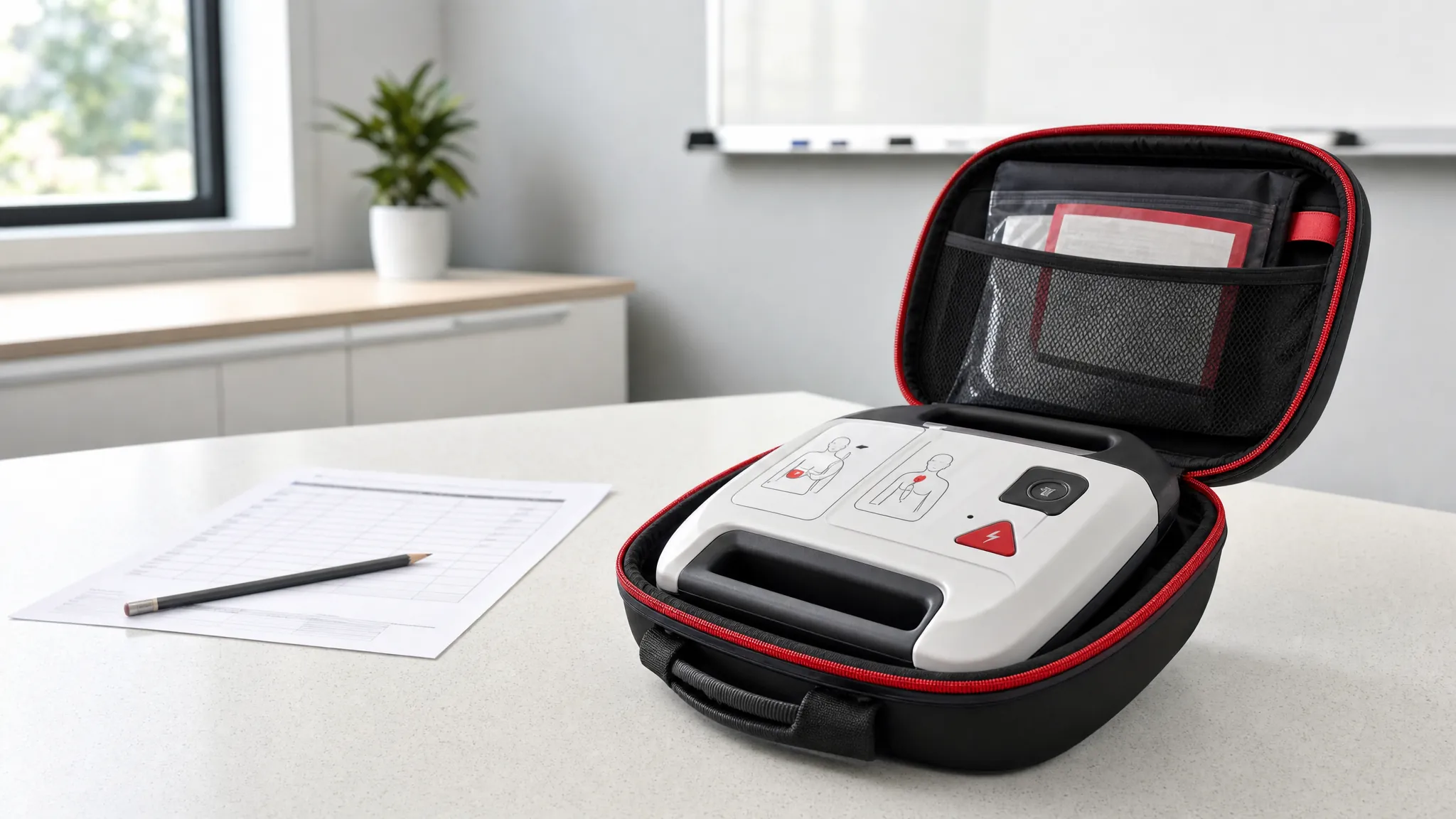
Before comparing cabinet styles, confirm the exact AED model, carry case, rescue kit, and any supplies that need to live with it. A cabinet must be deep and wide enough for the full setup, not just the device body. A tight fit can make the door difficult to close, pinch a carry case, or leave essential items stored somewhere else.
Measure the equipment and the proposed wall area. Consider the door swing, the path people will use to approach it, nearby furniture, and whether a person can stand in front of the cabinet without blocking a busy corridor. Keep the installation instructions for both the AED and cabinet close by. They are the source of truth for the model’s storage conditions, mounting method, and any electrical requirement.
A cabinet can be a sensible choice for a stable, public location. A mobile team, field program, or vehicle-based response plan may be better served by a case carried with designated staff. The question is not whether every AED needs a cabinet. It is whether a fixed, visible home will make this particular device more dependable in the way your people use the building.
Choose the cabinet style for the building
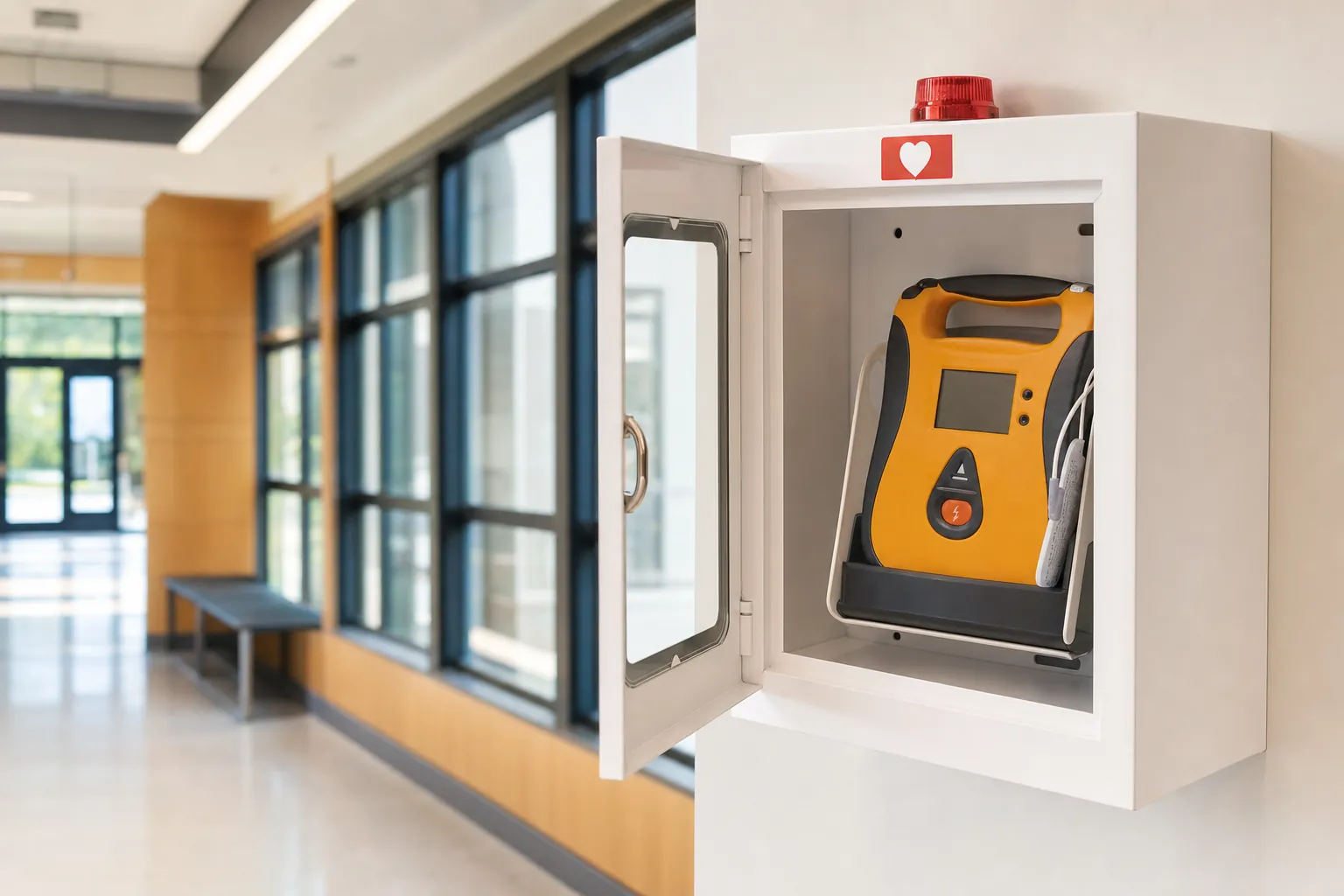
Most indoor AED cabinet decisions come down to surface-mounted, semi-recessed, or recessed storage. A surface-mounted cabinet projects from the wall and is often the most straightforward option when the wall cannot be opened up. It can work well in a hallway, lobby, reception area, gym entrance, or other shared space where the cabinet needs to be obvious.
A semi-recessed or recessed cabinet sits partly or mostly inside the wall. This can create a cleaner profile in a corridor, but it also requires enough wall depth and a proper installation plan. Do not pick a recessed option simply because it looks neater. Confirm that it will not interfere with building systems, required clearances, or the ability to open the door comfortably.
In each case, visibility matters more than visual subtlety. A cabinet that blends into a back corridor or sits behind a door can be harder to find than a simpler cabinet in a more obvious place. Use a location where staff, visitors, volunteers, and after-hours users can identify the AED without having to know the building well.
Decide whether an alarm or strobe solves a real problem
An alarmed cabinet can help draw attention when the door is opened and may discourage casual tampering in a public or high-traffic area. A visual strobe can add another signal in a noisy location or a place where a visible alert is useful. Those features can be valuable, but they are not universal requirements.
Think through the real setting. An alarm may be useful in a school hallway, public recreation center, or busy workplace where people need to notice that an AED is being retrieved. In a small office with a familiar response team, a basic visible cabinet may be enough. Avoid choosing a feature only because it sounds more secure. The essential test is whether it supports quick retrieval and clear awareness without confusing the people who need the device.
Make sure the team knows what the alarm means and who checks it after a drill or accidental opening. A cabinet alarm that is ignored, disconnected, or allowed to run without a plan eventually becomes background noise. Add it to the same regular check that confirms the AED’s ready indicator, pads, battery, and access route.
Keep the AED visible and easy to reach
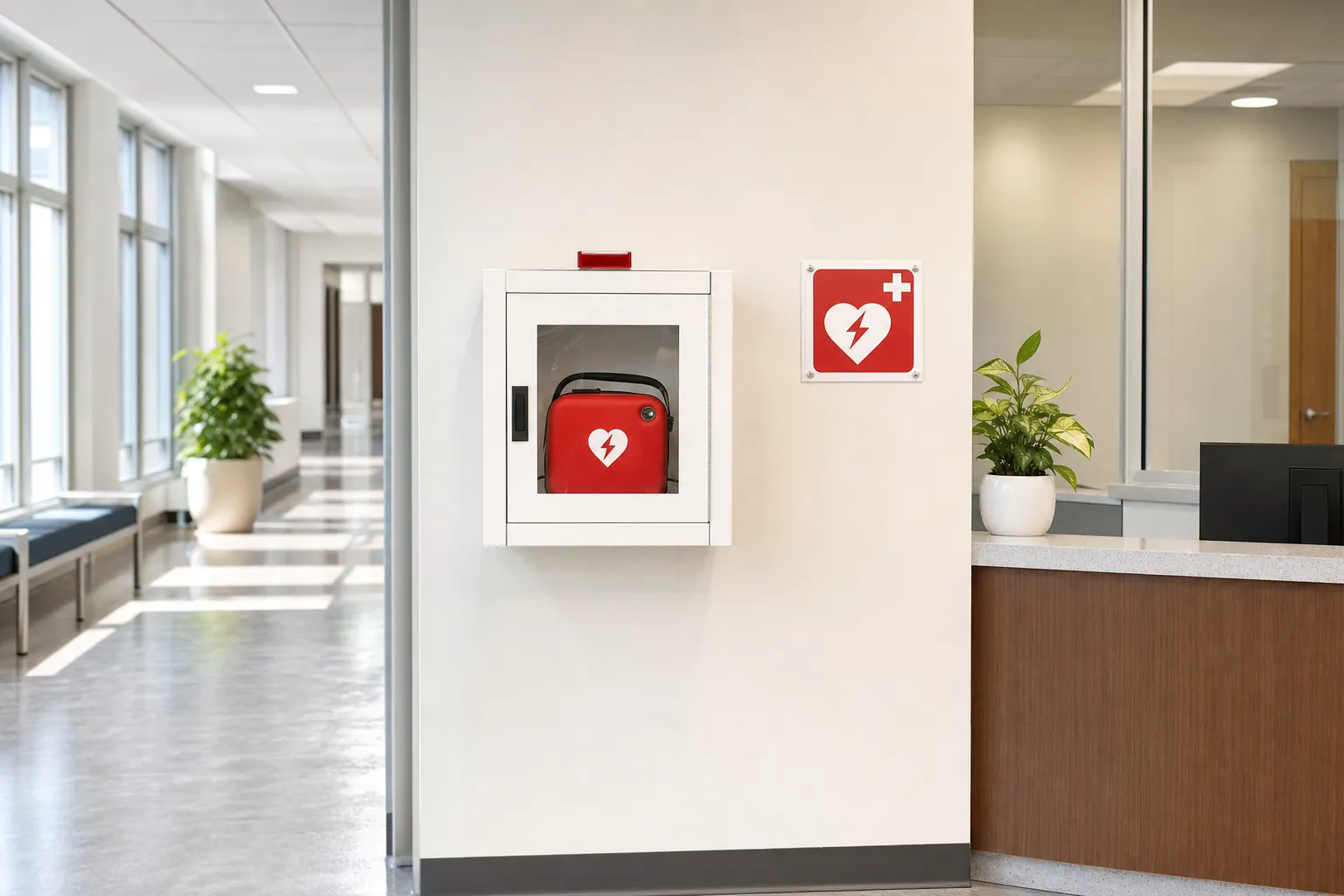
The cabinet is part of the wayfinding system. Put it in a shared, recognizable area with enough clear space that it is not hidden by displays, stacked boxes, furniture, seasonal decorations, or a crowd around a reception desk. Signage can help people locate it from down a hall or from a different approach direction, especially in larger buildings.
Access is just as important as visibility. Do not place the only AED behind a locked office, security desk, staff-only door, or a cabinet that requires a special key unless the people most likely to respond can retrieve it immediately. The American Red Cross’s AED response steps describe a sequence that includes calling 911, applying the pads, allowing analysis, and resuming CPR as instructed. Delays at the cabinet work against that sequence.
For a public area, test the route with someone who did not choose the location. Ask them to start at the main entrance, the busiest activity area, and the farthest commonly used room. Can they identify the AED without coaching? Can they open the cabinet, lift out the device, and leave without waiting for someone else? A short test often exposes problems that a floor plan misses.
Indoor cabinets and outdoor enclosures are different decisions
A standard indoor cabinet is not automatically appropriate for a location exposed to rain, direct sun, freezing temperatures, heat, dust, or heavy humidity. Outdoor AED storage needs closer attention to the AED manufacturer’s environmental guidance and to the enclosure’s stated protection features. The goal is to keep the device within its approved conditions while preserving a route that people can use quickly.
Outdoor equipment may need weather protection, ventilation, heating, cooling, an alarm, or a power connection, depending on the climate and enclosure. These are not details to guess at. Confirm the AED’s approved storage range and the enclosure specifications before making the purchase or planning the installation. An exterior athletic field, pool deck, loading area, or open campus can have very different demands from a protected indoor hallway.
If the answer is not clear, do not assume the most elaborate enclosure is automatically the right one. Document the environment, the AED model, expected access hours, and the power options, then use the quote request form to ask for help comparing a practical setup. A location-specific answer is more useful than copying another building’s cabinet choice.
Plan the installation around ordinary use
A good installation is easy to live with after the contractor or facilities team leaves. Keep the cabinet door clear, avoid placing it where a queue, open door, or equipment cart regularly blocks access, and make sure the mounting point is secure for the cabinet and AED weight. The wall may look empty today but become a storage spot or display area later, so write the AED location into the building’s safety information.
Think about different users. A workplace may have shifts and visitors. A school may have coaches, substitutes, student events, and evening programs. A church may rely on volunteers who only use the building once a week. A cabinet should make the AED easier to find for all of them, not just the person who ordered it.
Use a simple handoff after installation. Tell the people nearest the AED where it is, explain whether an alarm will sound, identify the normal inspection owner, and include the location in onboarding or event preparation. This is not a substitute for CPR and AED training. It is the practical groundwork that makes the location familiar before an emergency.
Make cabinet checks part of AED maintenance
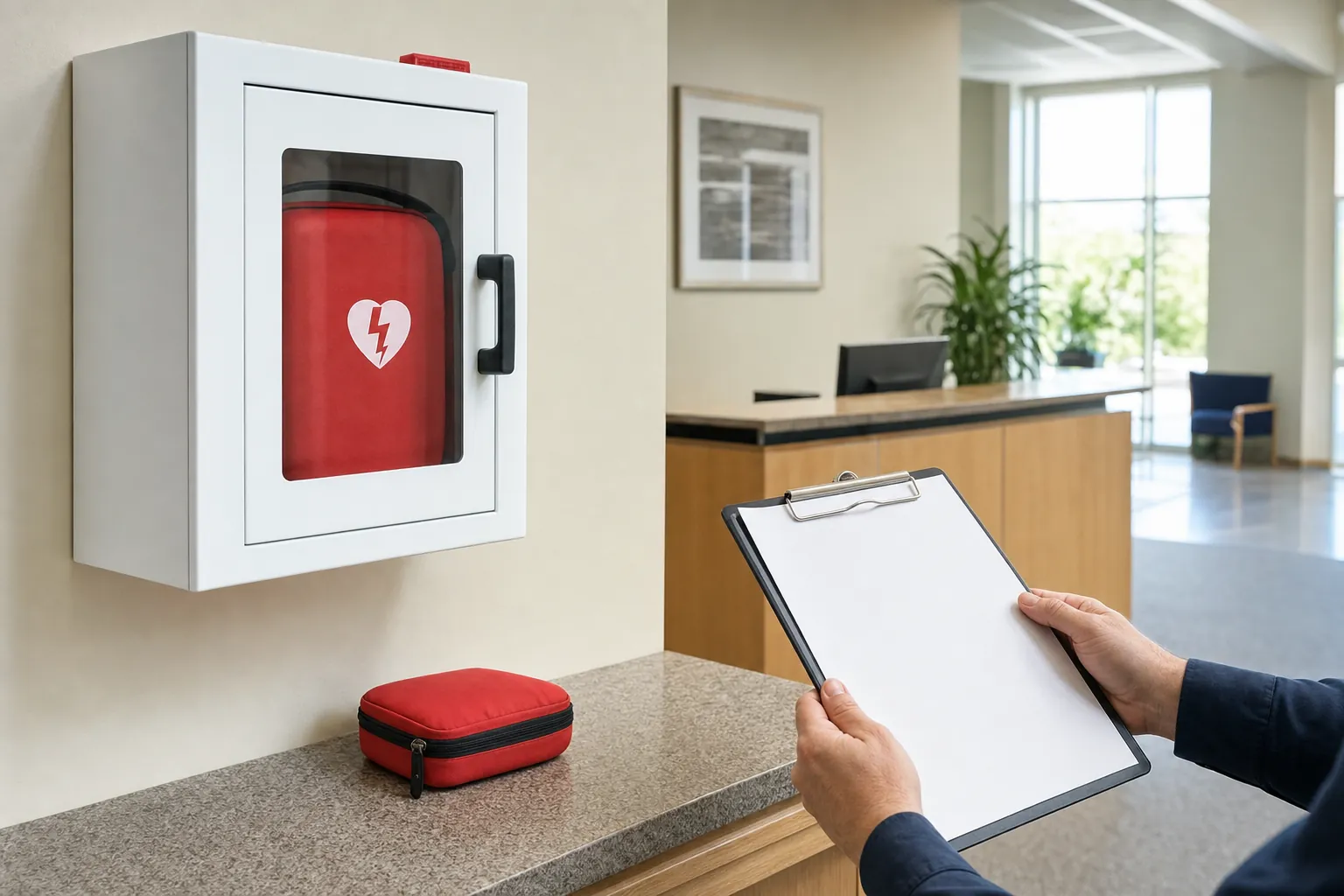
The cabinet should be included in the same recurring check as the AED. The AED maintenance checklist can help establish the broader routine. Confirm that the cabinet is unlocked as intended, the door opens freely, any alarm or strobe is functioning according to its instructions, the signage is visible, and the wall space remains clear.
Then check the AED itself: its ready indicator, pads, battery or cartridge, rescue kit, and any required records. A cabinet is only useful when the equipment inside is ready too. Assign this task to a named person or small team, especially when the building has multiple AEDs or changing staff.
Review the placement whenever the property changes. A renovation, new entrance, altered reception desk, added gym space, different after-hours access, or a new tenant can make an old location less useful. The cabinet may still be physically sound while the route to it no longer works well.
A practical AED cabinet checklist
- Does it fit the complete setup? Confirm space for the AED, case, rescue kit, and the supplies meant to stay together.
- Is the style right for the wall? Choose surface-mounted, semi-recessed, or recessed storage based on the real construction and clearance.
- Can people find it quickly? Use an obvious shared location, clear space, and useful signage where needed.
- Can people retrieve it without delay? Avoid keys, locked doors, blocked routes, and access plans that depend on one absent person.
- Do alarm or strobe features add value? Choose them when they improve awareness or discourage tampering in the actual setting.
- Is the environment appropriate? Match indoor or outdoor storage to the AED manufacturer’s guidance and the enclosure’s specifications.
- Is someone checking it? Include the cabinet, device, supplies, and signage in a recurring readiness routine.
This checklist also helps with approval. It turns a request for “an AED cabinet” into a clear decision about the equipment, location, access, environmental conditions, and upkeep needed for a complete setup.
How AED Ready Now can help
AED Ready Now offers AED cabinets, wall mounts, alarms, and placement equipment for locations that need a clear, dependable home for an AED. You can compare those options alongside new AEDs, Encore Series AEDs, and the supplies that support ongoing readiness.
For a school, workplace, gym, church, or multi-area facility, use the quote request form to share the AED model, proposed location, access concerns, and whether the setup is indoors or exposed to outdoor conditions. That creates a better starting point for choosing storage that fits the building and the people who rely on it.
Frequently asked questions
Does every AED need a cabinet?
No. A cabinet is useful when it gives an AED a visible, consistent, protected home in a shared location. A mobile team or vehicle-based plan may need a carry case instead. Follow the AED manufacturer’s storage guidance and choose the option that keeps the device easiest to find and retrieve.
Should an AED cabinet have an alarm?
An alarm can be useful in public or high-traffic settings because it draws attention when the cabinet is opened and may discourage casual tampering. It is not required for every location. Choose it when it supports the way the building is used, then include it in the regular readiness check.
What is the difference between a surface-mounted and recessed AED cabinet?
A surface-mounted cabinet projects from the wall and is often simpler to install. A recessed or semi-recessed cabinet sits partly inside the wall for a lower profile. The right choice depends on wall construction, clearance, cabinet fit, and keeping the AED visible and easy to reach.
Can an indoor AED cabinet be used outside?
Do not assume so. Outdoor storage may need a specialized enclosure that supports the AED’s approved temperature, moisture, and weather conditions. Check the AED manufacturer’s instructions and the enclosure specifications before choosing an outdoor location.
What should be checked on an AED cabinet?
Confirm the cabinet is visible, unobstructed, and accessible; the door opens freely; any alarm or strobe works as intended; the AED is present and shows ready status; and pads, batteries, rescue supplies, and signage remain current and in place.