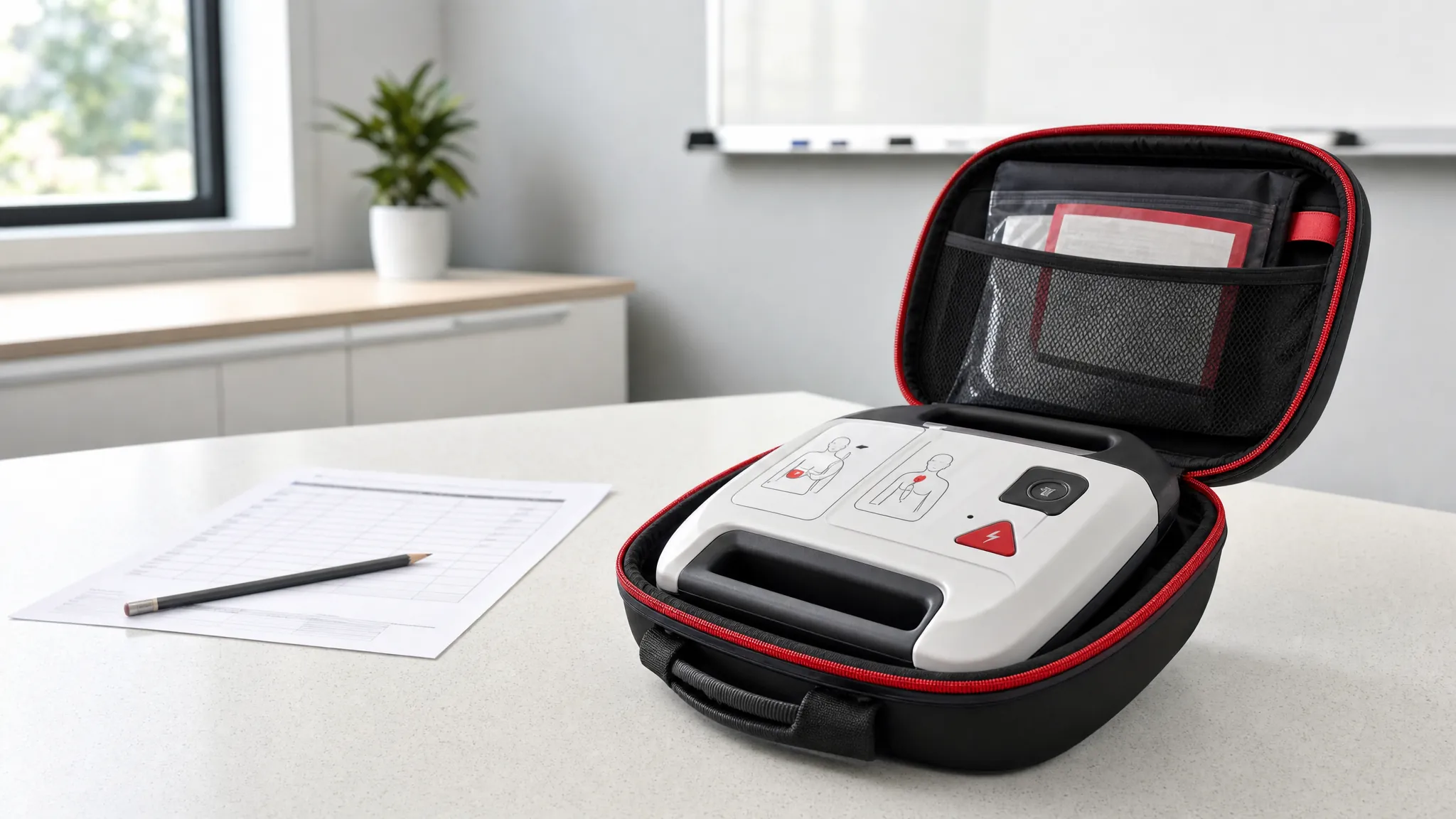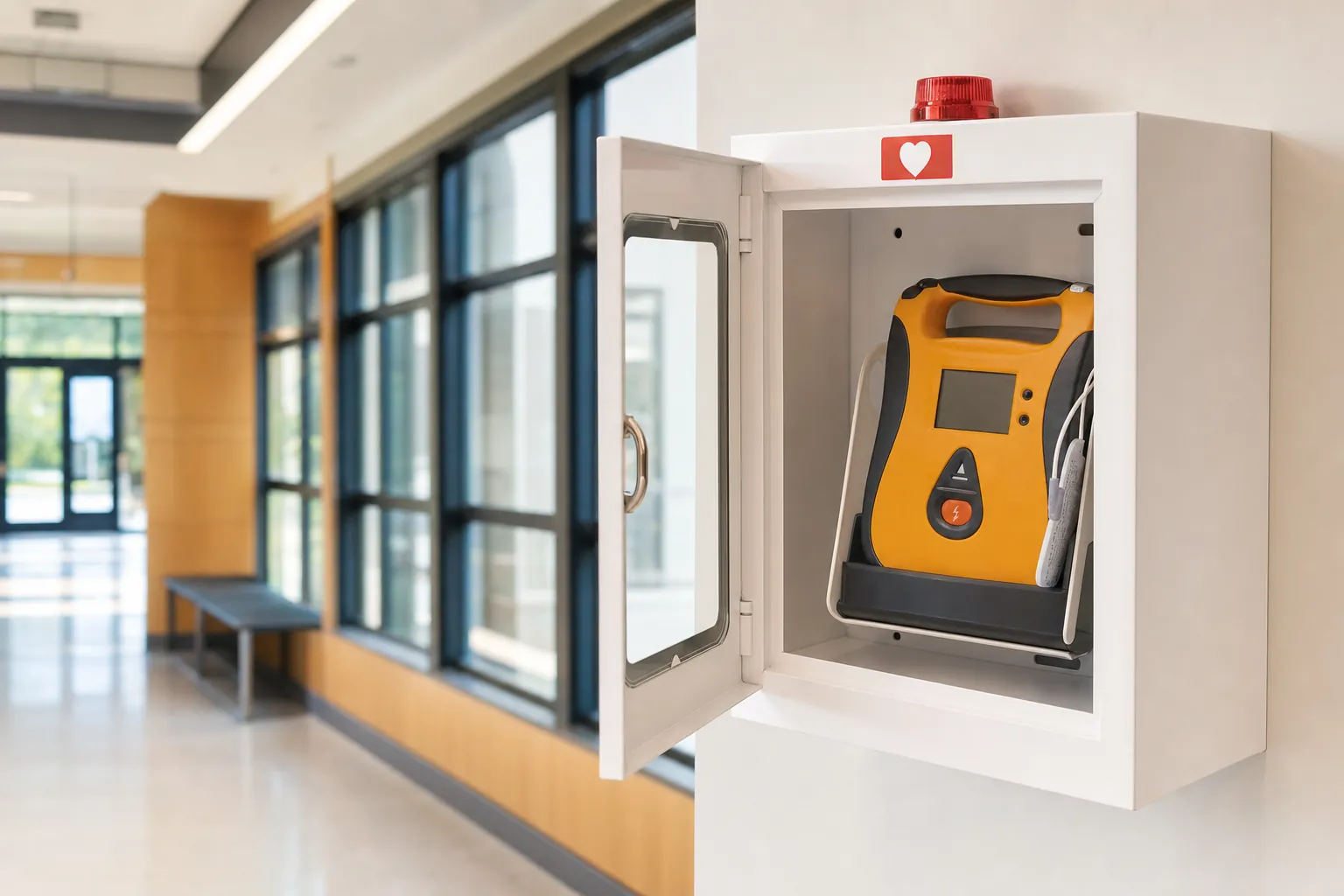

You should not rely on expired AED pads. Replace them with the manufacturer-approved pads for the exact AED model, then confirm the device returns to its normal ready status. Pads can look untouched in a sealed package after their date has passed, but an emergency is the wrong time to find out whether the adhesive, conductive gel, packaging, or connection will perform as intended.
AED pads are the electrodes that connect a person to the AED during a suspected cardiac arrest. The AED can guide a responder through the process only after the right pads are applied. The American Heart Association includes pad installation and expiration dates in its monthly AED monitoring checklist, alongside the battery or cartridge, status indicator, and location check.
Why AED pads have expiration dates
AED pads are designed to be stored ready for one critical use. The package protects the adhesive electrode surfaces and the conductive material that helps the AED analyze a heart rhythm and deliver a shock when advised. Over time, the materials and seal can change even when the package has never been opened. That is why the date on the pad package matters as much as the date on the AED battery or cartridge.
The date is the manufacturer’s stated service period for that pad set under its storage conditions. Heat, cold, moisture, direct sunlight, an opened pouch, or a damaged seal can create a problem sooner. A package that looks fine from across the room still needs a close check during the regular inspection.
The U.S. Food and Drug Administration advises AED owners to follow the manufacturer’s instructions for their device and to keep it maintained. Its AED overview is useful context: the AED is a medical device, and the pads, battery, and readiness indicator all belong to the same response system.
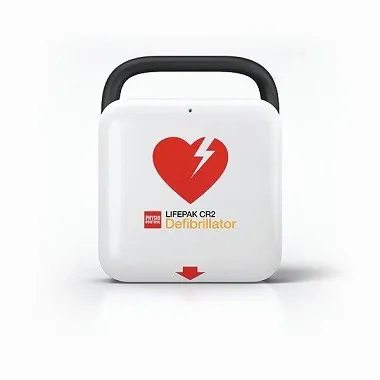
What to do when AED pads are expired
Start by treating the pad set as due for replacement. Check the AED model name and the pad package part number, then order the approved adult or pediatric replacement that matches the device. Do not choose a generic pad because it has a similar connector, and do not assume pads from another AED in the same building will fit. Compatibility affects how the AED recognizes the pads and follows its own testing requirements.
Keep the AED in its assigned location while you arrange the replacement, unless the device instructions say otherwise or the status indicator shows it is not ready. If the expired pads are the only set attached to the device, document the situation and use the organization’s response plan to decide whether backup coverage is needed until the approved set arrives. A larger school, gym, workplace, or campus may have another AED that can cover the area temporarily. A small location may need to make the gap visible to the person responsible for safety.
When the new pads arrive, install them exactly as the operating guide directs. Confirm the package is intact, check the new expiration date, connect or store the pads in the required position, and wait for the device to complete any self-test. Record the date, the person who completed the replacement, and the new expiration date. If the AED beeps, shows a warning, or does not return to ready status, follow the model-specific instructions rather than assuming the new pad set solved every issue.
Do not open the old pads for a practice drill
Expired emergency pads are not a substitute for training pads. Opening the pouch for a drill removes the seal and makes it harder to keep the device organized while you wait for the correct replacement. It also creates confusion about whether the AED has a usable set installed. Keep live response equipment and training equipment separate.
For CPR and AED practice, use a dedicated trainer and non-functional training pads. Those products are made to be handled, repositioned, and reset during class without affecting the live AED. The site’s AED trainer and accessory collection helps teams compare practice units, training pads, remotes, and related supplies. Pairing a trainer with CPR training equipment lets a group rehearse the full sequence without opening the emergency device.
A short practice session should also clarify where the live AED is located, who calls 911, who retrieves the device, and who starts CPR when appropriate. The American Red Cross outlines the familiar AED sequence in its AED steps guidance: turn on the device, apply the pads, allow analysis, keep everyone clear, follow the prompts, and resume CPR as directed.
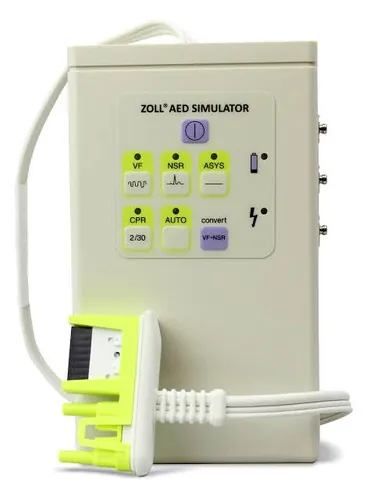
How to check AED pads during a monthly inspection
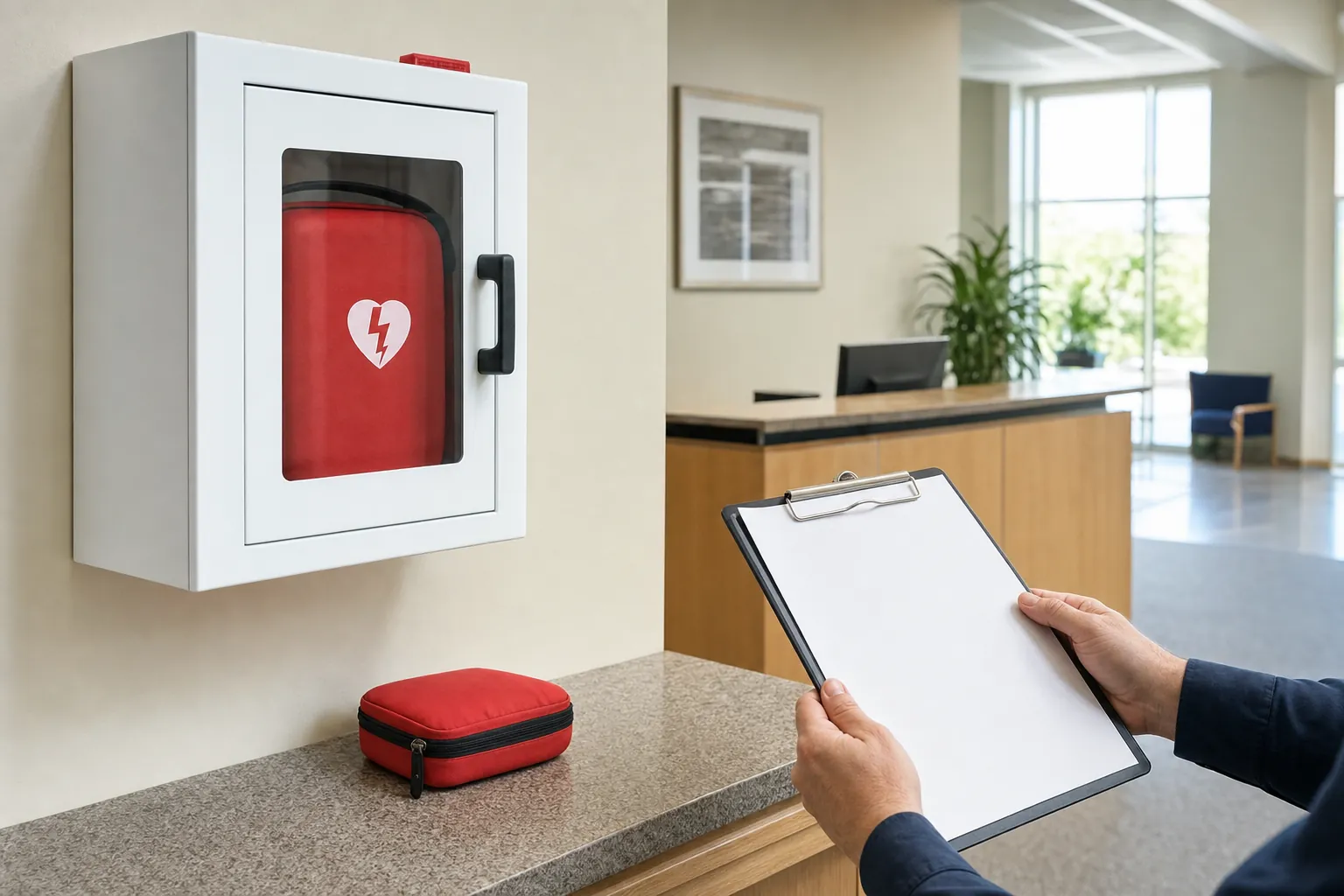
A monthly check is the simplest way to avoid an overdue pad date becoming a surprise. It does not need to be complicated. The person responsible for the AED should inspect the device in its assigned location and record the details that affect readiness. The site’s AED maintenance checklist provides a broader routine for the device, storage, supplies, and inspection record.
- Confirm the AED is present and easy to reach. Make sure it has not been moved, blocked, or placed behind an access barrier.
- Check the ready indicator. Look for the normal status display specified by the manufacturer and investigate a warning promptly.
- Read the pad expiration date. Check both adult pads and pediatric pads when the program uses separate sets.
- Inspect the pad pouch. Look for tears, punctures, swelling, moisture, an opened seal, or any condition that requires replacement.
- Check the battery or cartridge date. Pads and batteries may have separate dates, and some models combine key supplies in one cartridge.
- Record the next action. Note an upcoming expiration early enough to allow for internal approval, ordering, delivery, and installation.
For several devices, use one log that lists the AED location, model, serial number, pad part number, pad date, battery or cartridge date, inspection date, and owner. This is more useful than a calendar reminder with no context. It lets a new facilities manager, school nurse, safety lead, or volunteer see exactly which supplies belong to each location.
Adult and pediatric pads are different replacement decisions
Some AED programs need only adult pads, while others keep pediatric pads or an approved pediatric setting available for younger children. Do not assume that an adult pad set covers every situation, and do not buy pediatric pads unless the AED model supports them. The device manual controls which option is approved, how it is stored, and when it should be changed.
This is a point where a quick check of the exact model pays off. One AED may use separate adult and pediatric electrode sets. Another may use a pediatric key, switch, or combined system. The product listing and supplies collection can help narrow the options, but the part number on the existing AED and the manufacturer’s instructions should make the final call. AED Ready Now’s AED accessories and batteries collection is a useful place to compare the types of replacement supplies, while model compatibility remains essential.
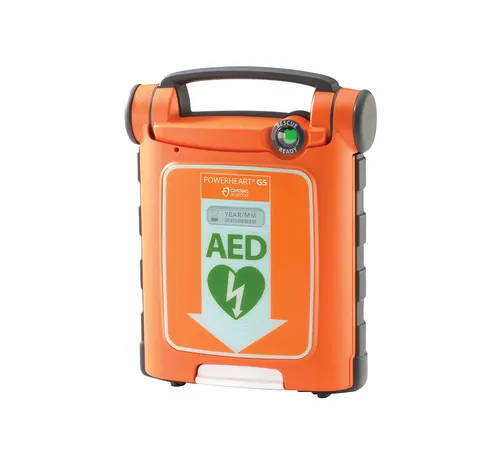
Replace pads early, not on the expiration day
Set a first reminder well before the printed date. That gives a team time to confirm the part number, request approval, place the order, receive the shipment, install the pads, and complete the readiness check. Waiting for the final week turns a predictable task into an avoidable rush, especially when a location has a purchasing process or relies on one busy person to manage supplies.
A practical schedule has three points: an early planning reminder, an ordering reminder, and a final installation check. The exact lead time depends on the organization’s buying process, but the principle is simple. The replacement should be in place before the old set is out of date, not after someone notices a warning during an inspection.
This approach also keeps a building’s AED plan easier to explain. Instead of saying that equipment is handled, the responsible person can show the date, the replacement part, and the next scheduled check. That is useful for a business owner, school administrator, board, facilities team, or any organization that wants a dependable routine without a complicated program.
Keep the replacement details where the next person can find them
Many AED supply problems are not caused by a difficult replacement. They happen because the person who notices the date does not know the exact model, where the approved part number is recorded, or who can authorize the order. A short record removes that guesswork. Keep it with the AED program documents, not only in one person’s inbox or memory.
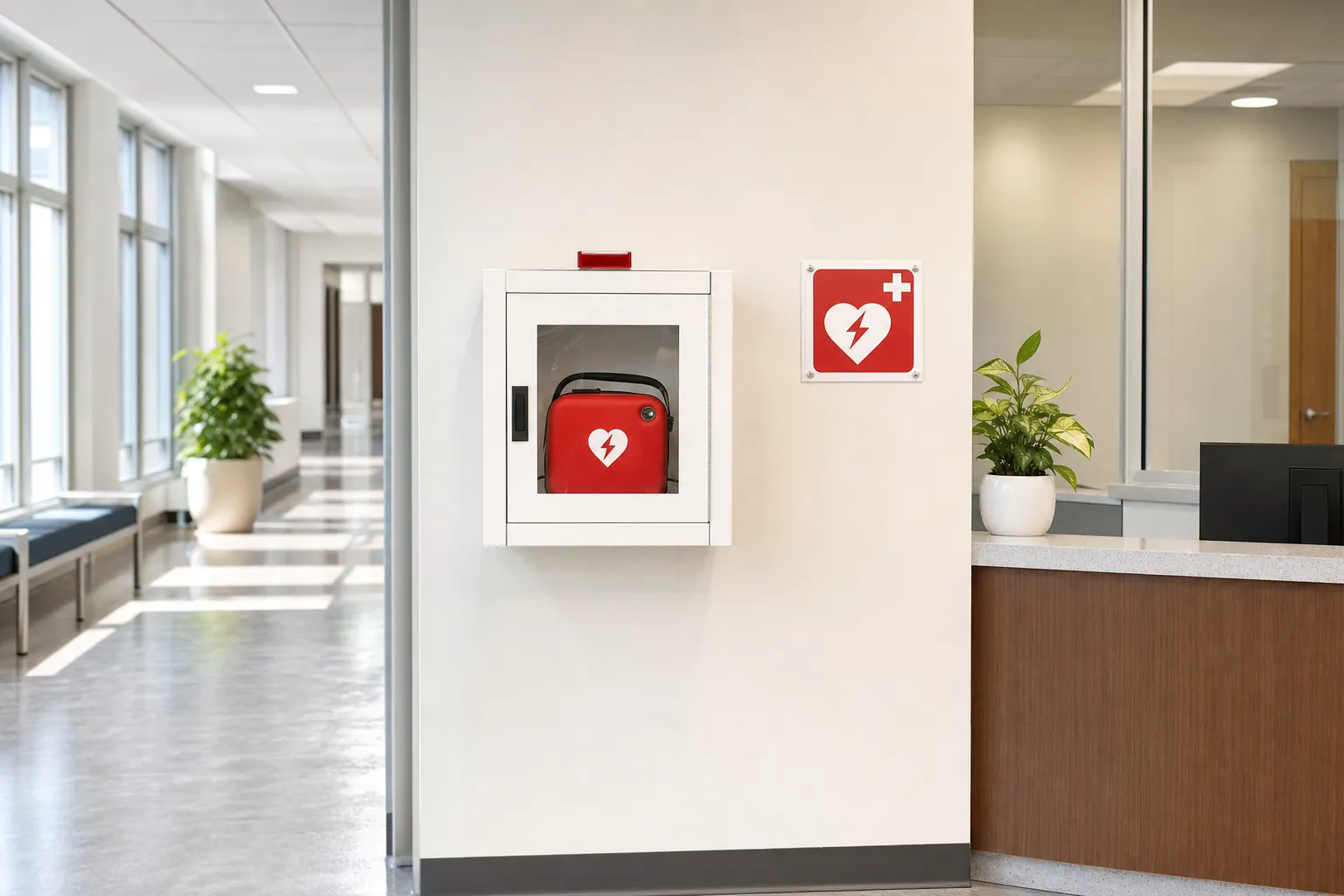
For each device, list the location, manufacturer, model, serial number, adult pad part number, pediatric pad part number if applicable, battery or cartridge part number, expiration dates, and the contact who owns the next step. Add a note about where the AED is stored, especially when it is in a cabinet, vehicle, athletic facility, or an area with limited access. The AED placement guide can help teams check that the device remains visible and reachable while those supply details stay current.
When an AED is moved, replaced, or used in an emergency, update the same record right away. A device may need fresh pads after use even if the former package date was months away. The manufacturer’s operating instructions should determine the post-use steps, including any accessories or data review required before the AED returns to service. Keeping the record current makes that follow-up much less dependent on who happened to be on site that day.
Use the same record when planning the next budget cycle. It shows which replacement dates are approaching, which locations use the same supplies, and whether a spare set is appropriate for a high-traffic or multi-device site. That turns a routine check into a simple planning tool instead of a last-minute purchasing problem.
How AED Ready Now can help
AED Ready Now helps organizations compare the equipment that keeps an AED program practical after the first purchase. Start with AED replacement supplies, then compare new AEDs or Encore Series AEDs when a device is also due for review. The right supply decision begins with the exact AED model, its approved pads, its battery or cartridge system, and the conditions where it is stored.
For a workplace, school, church, gym, or multi-location property, use the quote request form to share the device models, quantities, and replacement dates you are managing. A clear list of equipment and dates makes it easier to plan the correct pads before readiness becomes a last-minute problem.
Frequently asked questions
Can you use AED pads after the expiration date?
Do not rely on pads after their expiration date. Replace them with the manufacturer-approved pads for the exact AED model, then follow the device instructions to confirm the AED is ready for service.
What happens if AED pads are expired?
The pads may no longer meet the manufacturer’s stated readiness period, even if the package looks sealed. Treat them as due for replacement, record the issue, and make sure the location has a clear coverage plan until the approved pads are installed.
Can I use generic replacement pads on an AED?
No. Use pads approved for the exact AED model. A connector that looks similar does not confirm compatibility, and the wrong pad set can prevent the AED from working as intended or completing its required self-test.
How often should AED pads be checked?
Check the pad package and expiration date during the device’s regular inspection. Many organizations use a monthly visual check, but the manufacturer’s instructions for the specific AED should set the final schedule.
Should AED pads and batteries be replaced at the same time?
Not necessarily. Some AEDs use separate pads and batteries, while others use an integrated cartridge. Track each date and follow the model-specific replacement instructions so the correct item is replaced at the right time.